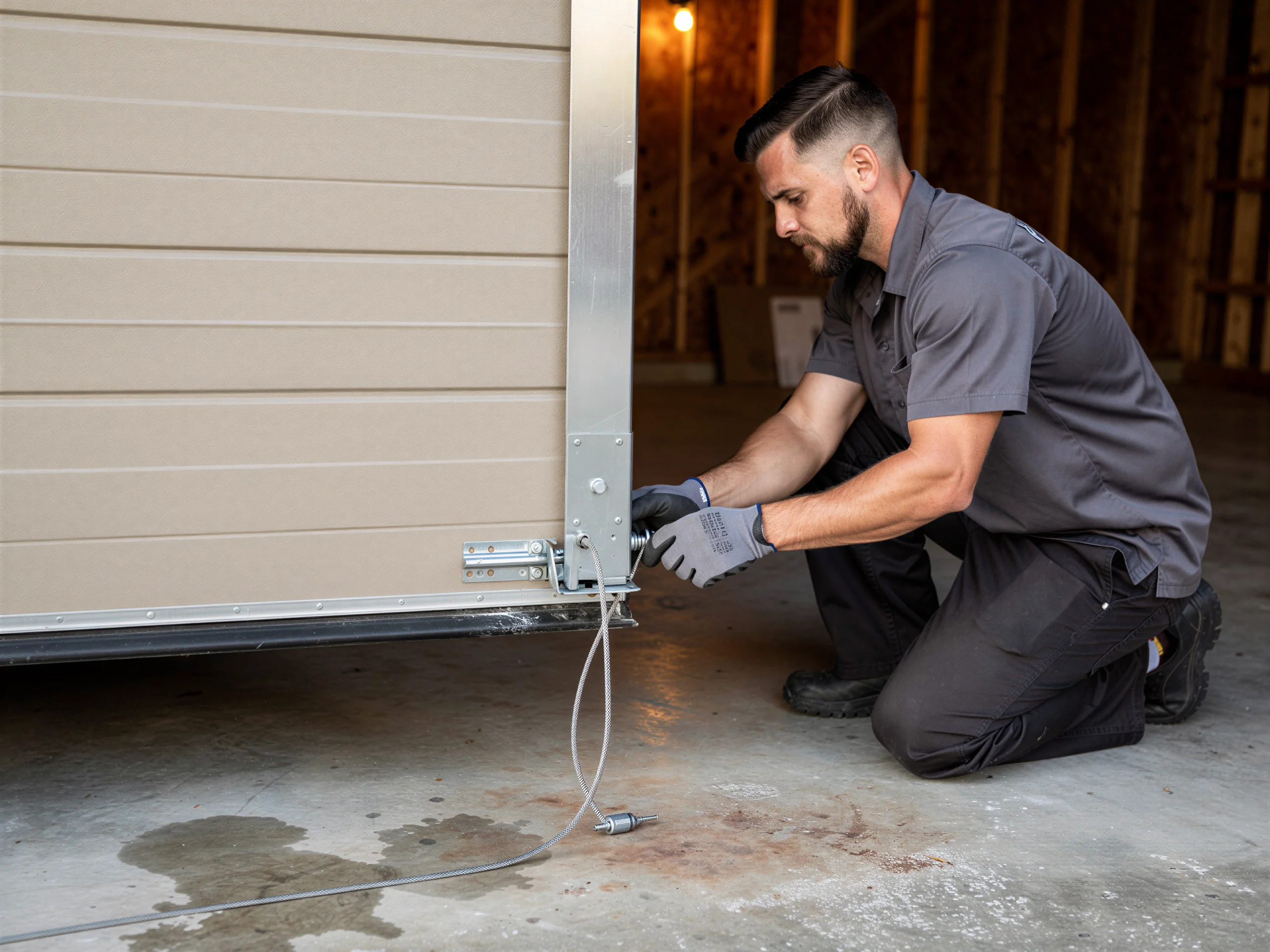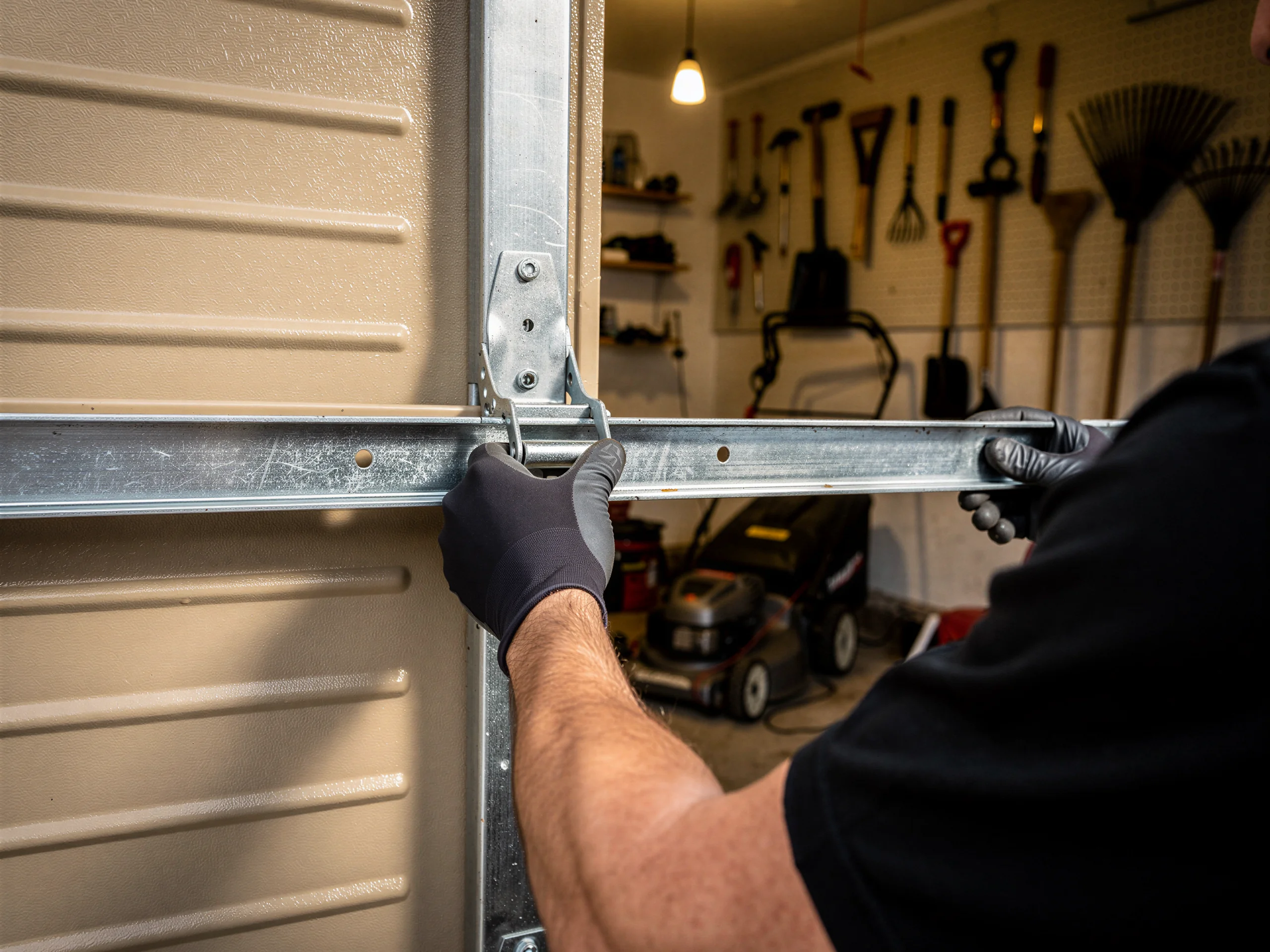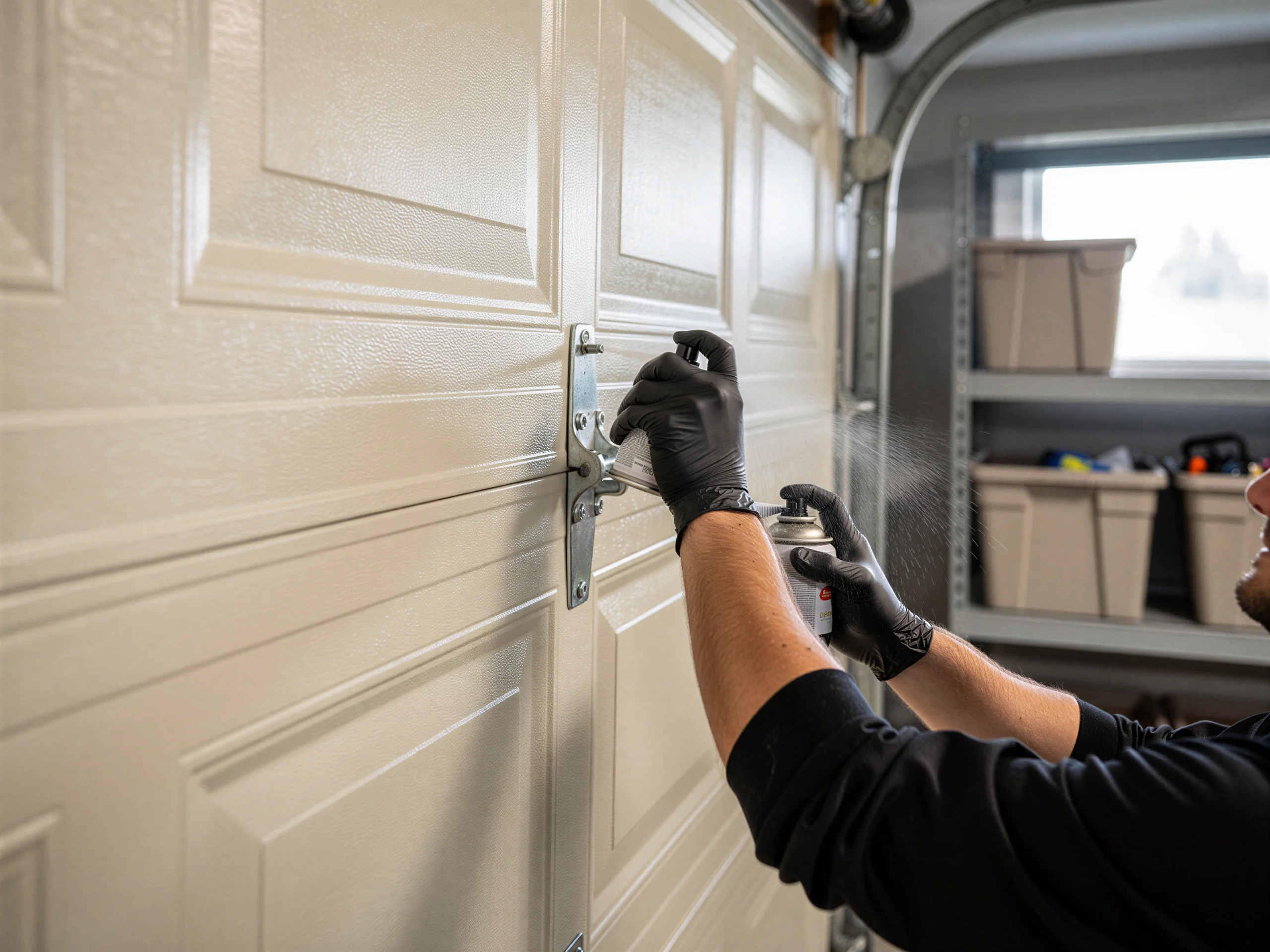
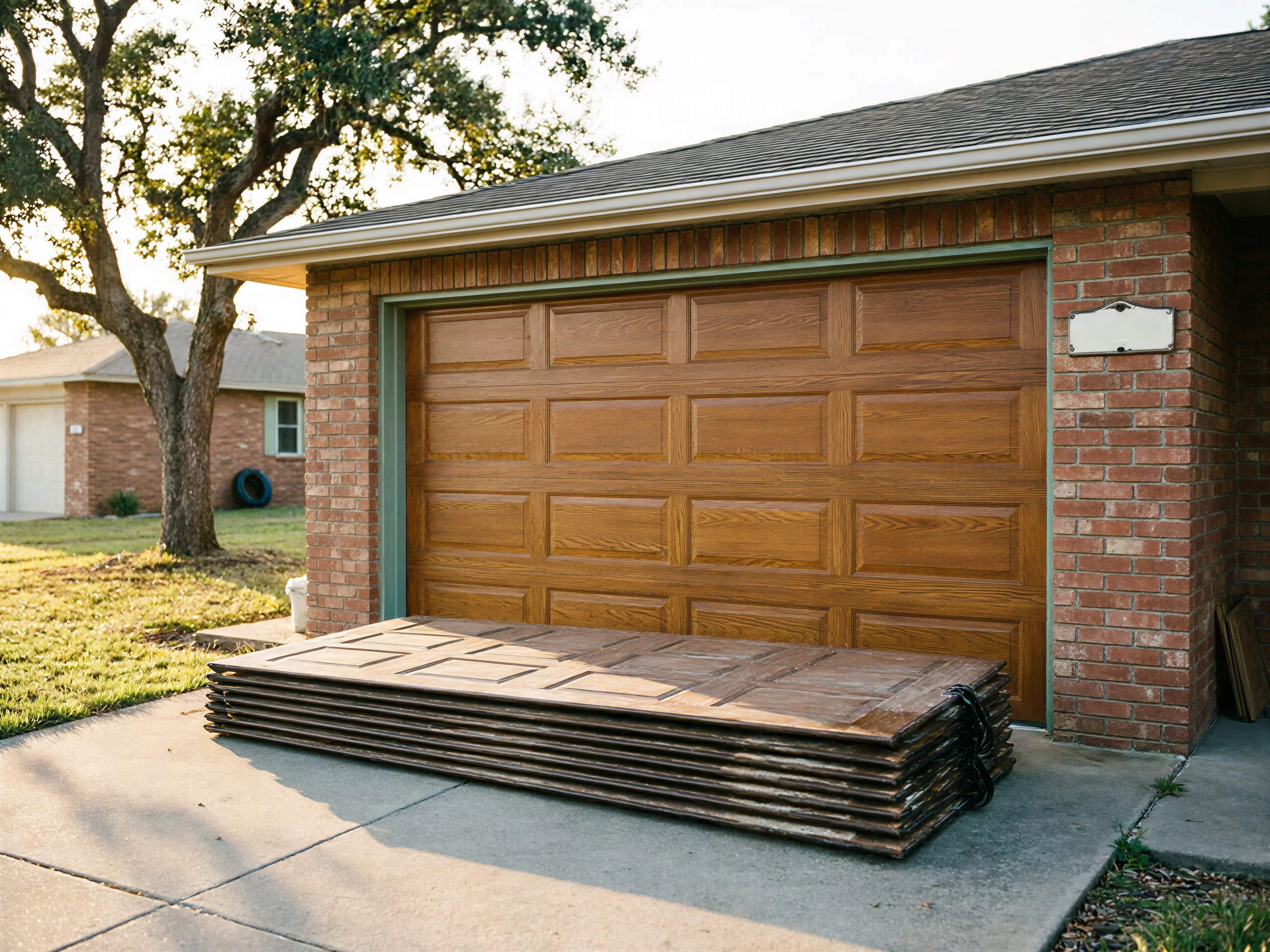
Stocked Parts
Median household income here runs about $36,705, noticeably lower than the wider Texarkana service area's $51,346. That gap shapes what we bring on the truck for a new install in Nash: steel sectional doors in standard widths, torsion spring sets sized for single and double openers, and galvanized track - the parts that cover most of the housing stock without pushing a job into custom-order territory.
Torsion-ready from the start
Nash's homes mostly went up around 1992, near the tail end of the 1971-1992 build range across the wider service area, so most garages were built to take a torsion spring system from the start rather than the older extension-spring setups you still find on pre-1970s houses elsewhere.
Basic chain-drive openers
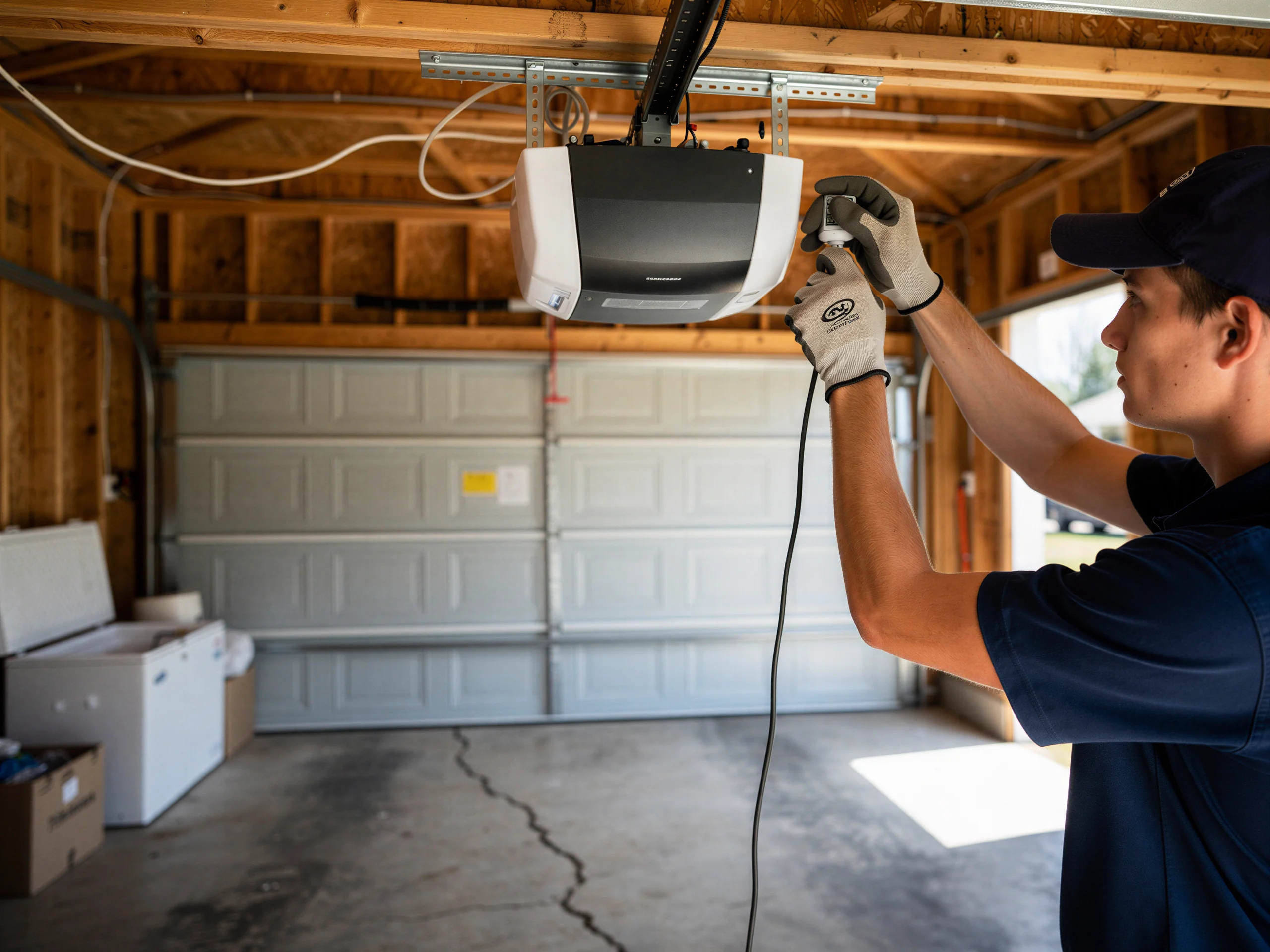
That means a clean torsion install usually fits the existing header and track clearance without reframing. We also stock basic chain-drive openers, which match the era and the price point better than belt-drive units with smart features most owners here don't ask for.
Oversized and glass doors
What we don't carry on the truck: oversized custom doors, glass-panel doors, or anything outside standard residential widths - those get special-ordered and quoted before we commit to a date.
The DIY Question
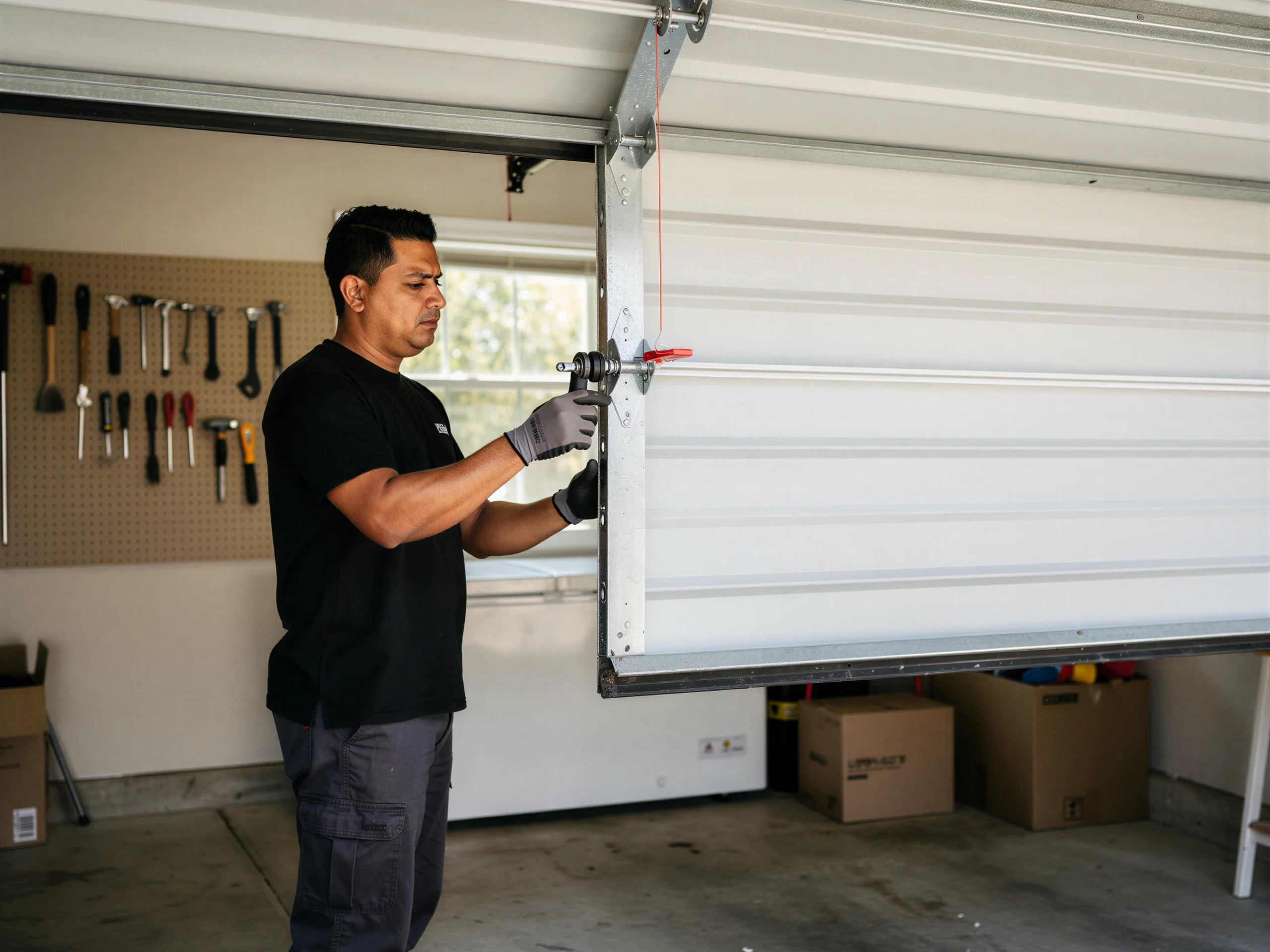
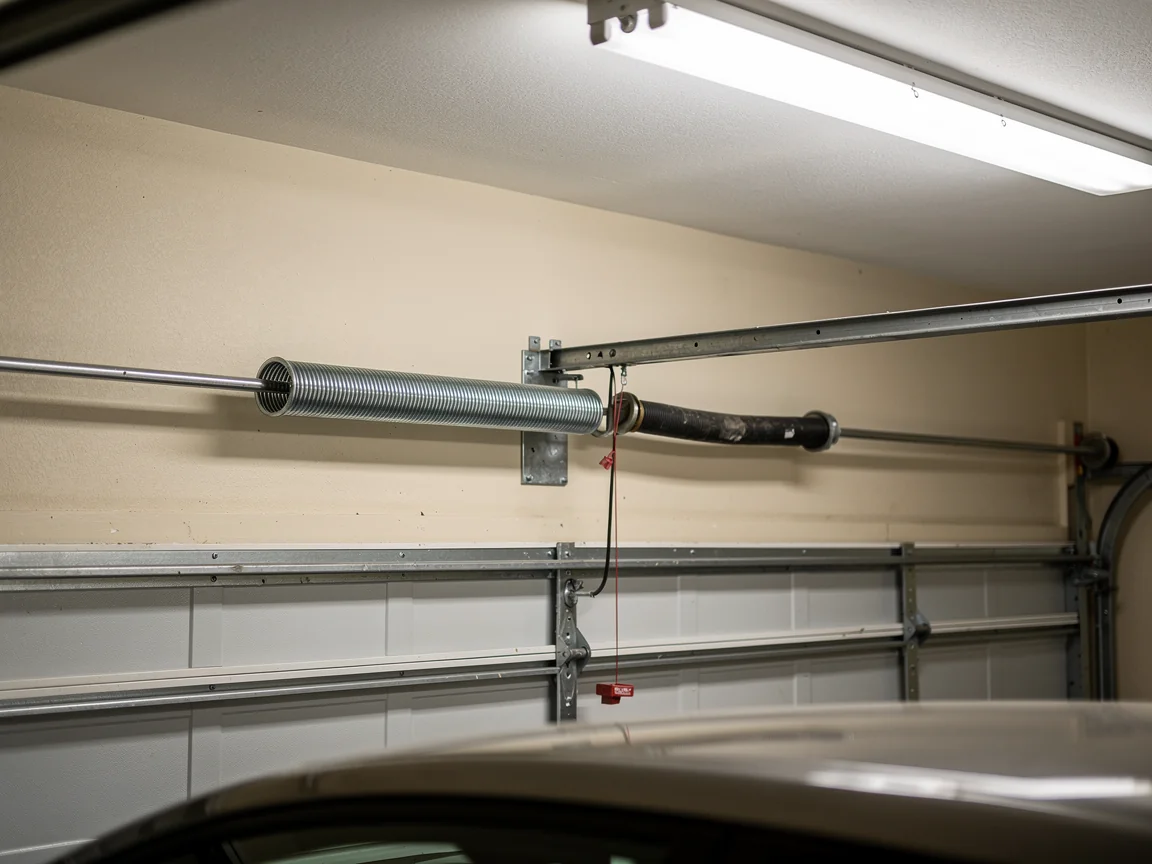
New installation is not a weekend project. A torsion spring under tension can break bones if the winding bars slip, and setting the header bracket height wrong on a garage built around 1992 means the door binds against the track for the life of the install. We see this most when a homeowner buys a door kit online and tries to hang it solo - the door technically closes, but it's out of plumb by enough that the opener strains on every cycle. If you're comfortable with a reciprocating saw and a torque wrench, swapping a broken panel on an existing door is reasonable DIY territory. A full new install with a new track, new springs, and a new header seal is not, mainly because the margin for error on spring tension is close to zero and most homeowners don't own a set of winding bars. We'll say it plainly: if you call us after a DIY install has already gone sideways, the fix usually costs more than if we'd started from scratch.
What You Are Seeing
A door installed when the house went up in the early 1990s is now past 30 years old, and it shows in specific ways. Steel panels on these doors were painted, not galvanized the way current stock is, so rust starts at the bottom panel seam first - you'll see bubbling paint before you see a hole.
Steel-on-steel grinding
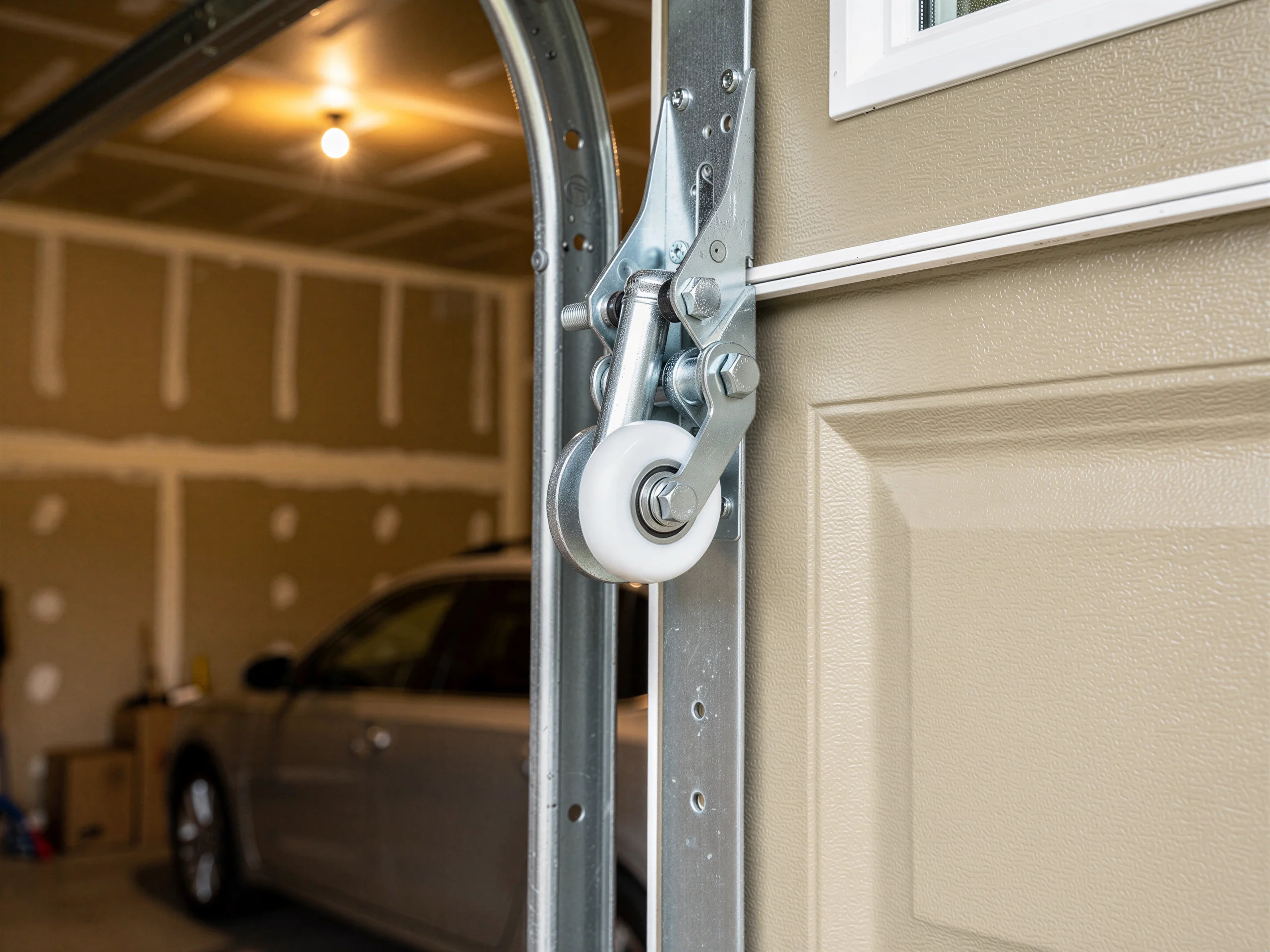
Rollers from that era were steel-on-steel, not nylon, so a door that's original to the house usually grinds and shudders on the way up even with fresh lubrication.
Summer heat in garage
Non-insulated single-layer doors were standard then, which in a moderate-heat climate like this one means the garage runs noticeably hotter in summer than an insulated door would allow - not a safety issue, but it's the complaint we hear most from owners replacing doors of this age.
Replace now or wait
If your door is original to a house built around 1992, the question usually isn't whether to replace, it's whether to replace now or wait for the next failure.
The Complications
Garages built in this stretch of the service area were framed for the door of their day, and that creates two recurring issues on a new install.
Limited headroom solutions
Headroom above the opening is often tighter than current torsion spring and drum setups want, especially on double doors, so a new install sometimes means adding a jackshaft opener or a low-headroom spring kit instead of swapping on a like-for-like basis.
Outlet and wiring limits
Second, wiring: a garage from this era usually has a single outlet near the ceiling meant for a chain-drive opener's pull cord, not a dedicated circuit, and if you're upgrading to an opener with battery backup or a keypad, that outlet placement matters.
Electrical work referred out
We don't do electrical work beyond plugging into an existing outlet - if the garage needs a new circuit run, that's a call to an electrician before we schedule the install. Nash sits about 3 miles from our Texarkana base, which doesn't change the install itself, but it does mean we're working from the same stocked inventory and the same crew schedule as the rest of the service area, not a separate branch.
The Cost of This Job
At a median household income of $36,705, a full new garage door installation is a bigger stretch here than it is across the wider Texarkana service area, where the median runs over $51,000. That's the number that decides most of what we quote in Nash: a basic steel sectional door with a torsion spring and a chain-drive opener on standard track, sized to fit the garage as built, rather than upgraded insulated or carriage-style doors that run well past that budget. When a repair - a new spring, a new roller set, a cable - would run close to half of what a full new door costs, replacement usually wins, since you're not paying twice. When the repair is a single part on a door that's otherwise sound, repair is the better call even on an older door. We don't carry financing in house, so the number we quote on site is the number due at completion; that's worth knowing before you book the appointment rather than after.
Talk to a local pro
Garage door service in Texarkana?
Same-day service with honest, upfront quotes.