Time on the Job
A door that's jumped its track isn't a mystery once you've seen a few hundred of them. The rollers have come out of the channel on one or both sides, usually because a cable snapped, a hinge cracked, or the bottom bracket worked loose over the years.
Checking rollers and hinges
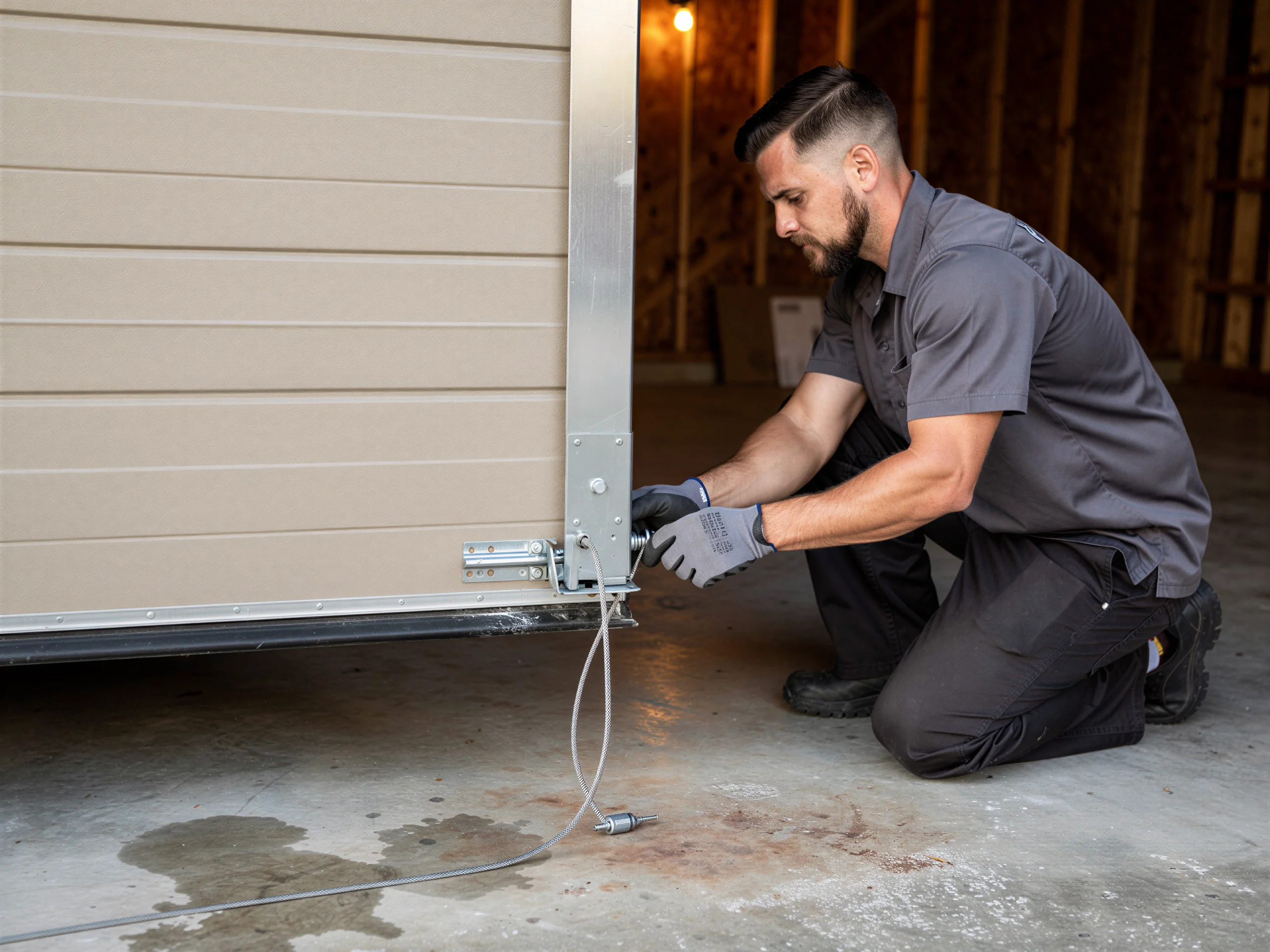
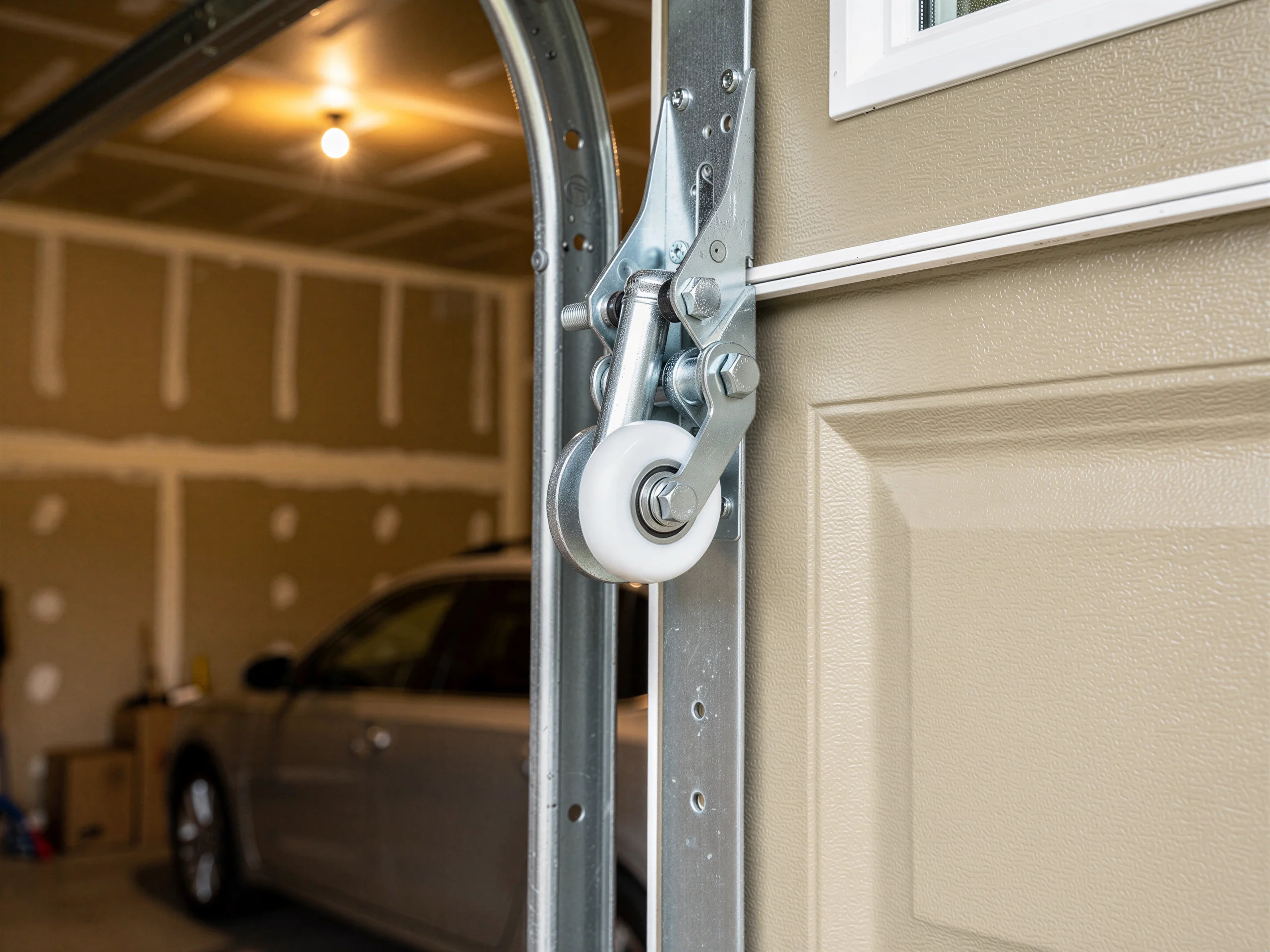
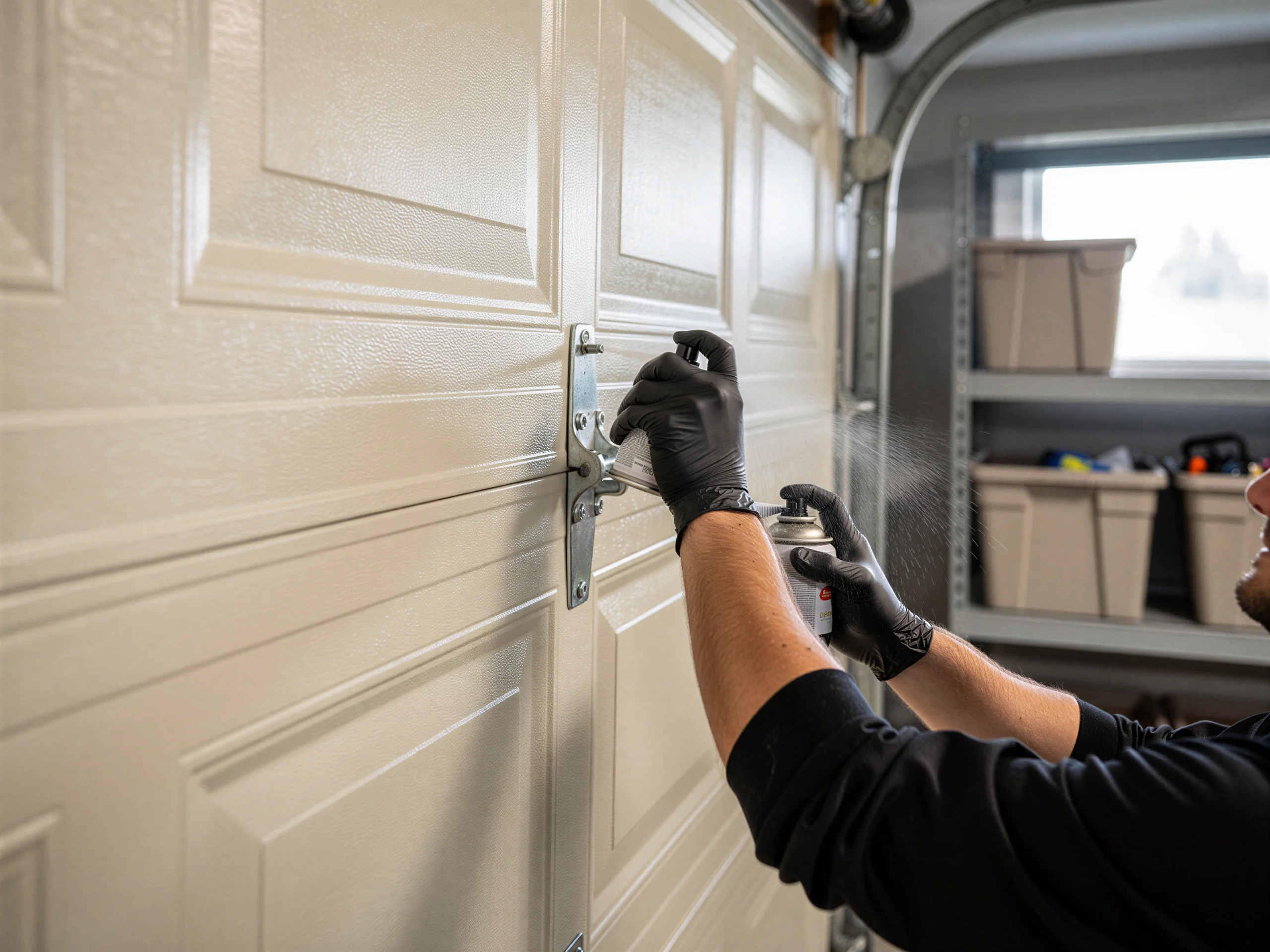
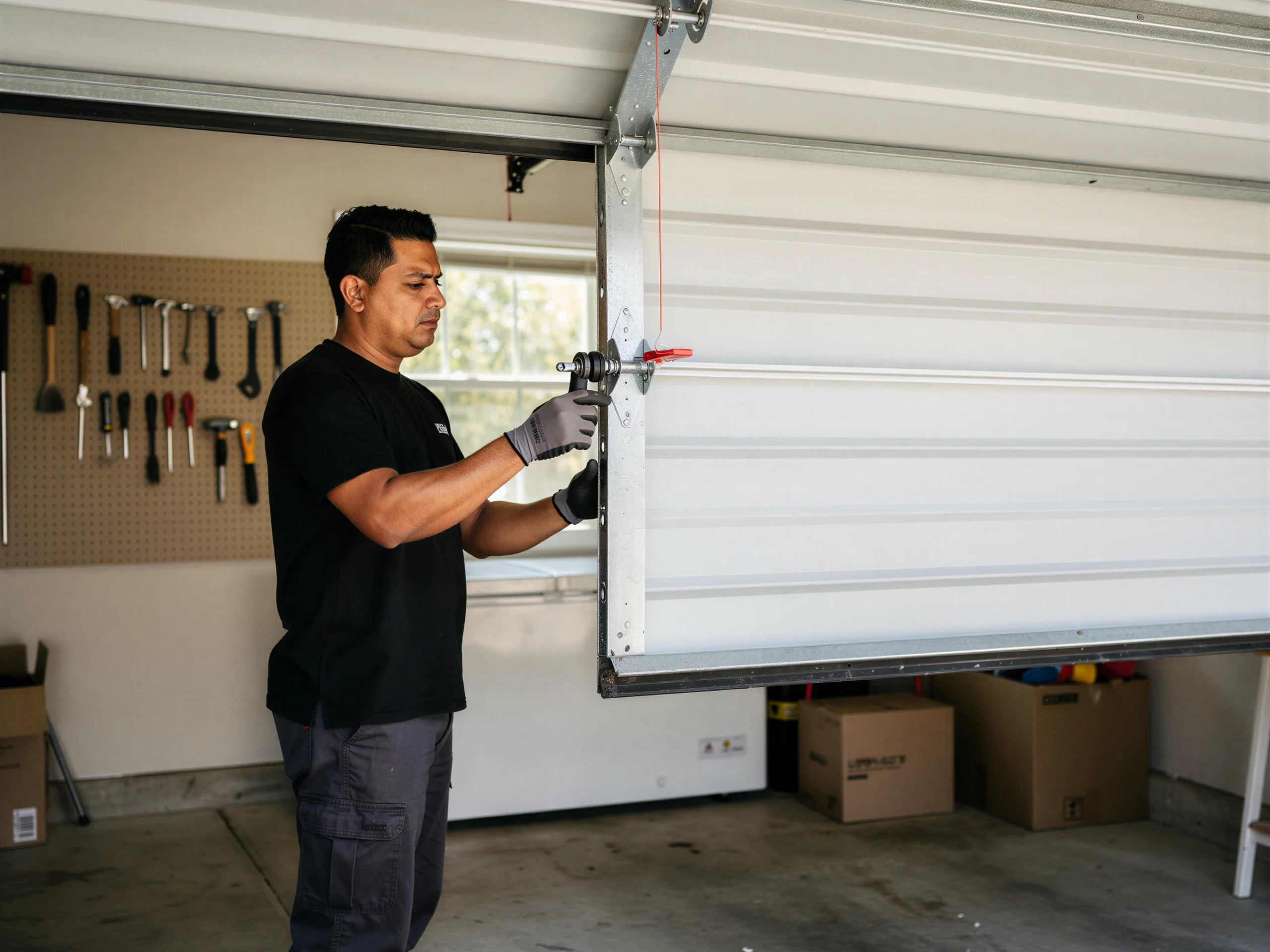
We get the door back on track, check the rollers and hinges for wear, and make sure the cables and bottom brackets are sound before we call the job done - if the track itself is bent or crimped from the door riding against it, that section gets swapped rather than hammered back into shape.
Root cause fixed
We don't just shove the door back into the channel and leave; a door that comes off once with worn hardware will come off again within weeks if the root cause isn't fixed.
Wear patterns across towns
Across the service area - Nash, Wake Village, Leary, Hooks, Redwater, New Boston, and the homes near N.A.S. - the pattern of wear is similar enough that we know what to check first: the bottom roller brackets, the cable drums, and the track bolts into the jamb, in that order.
What You Are Seeing
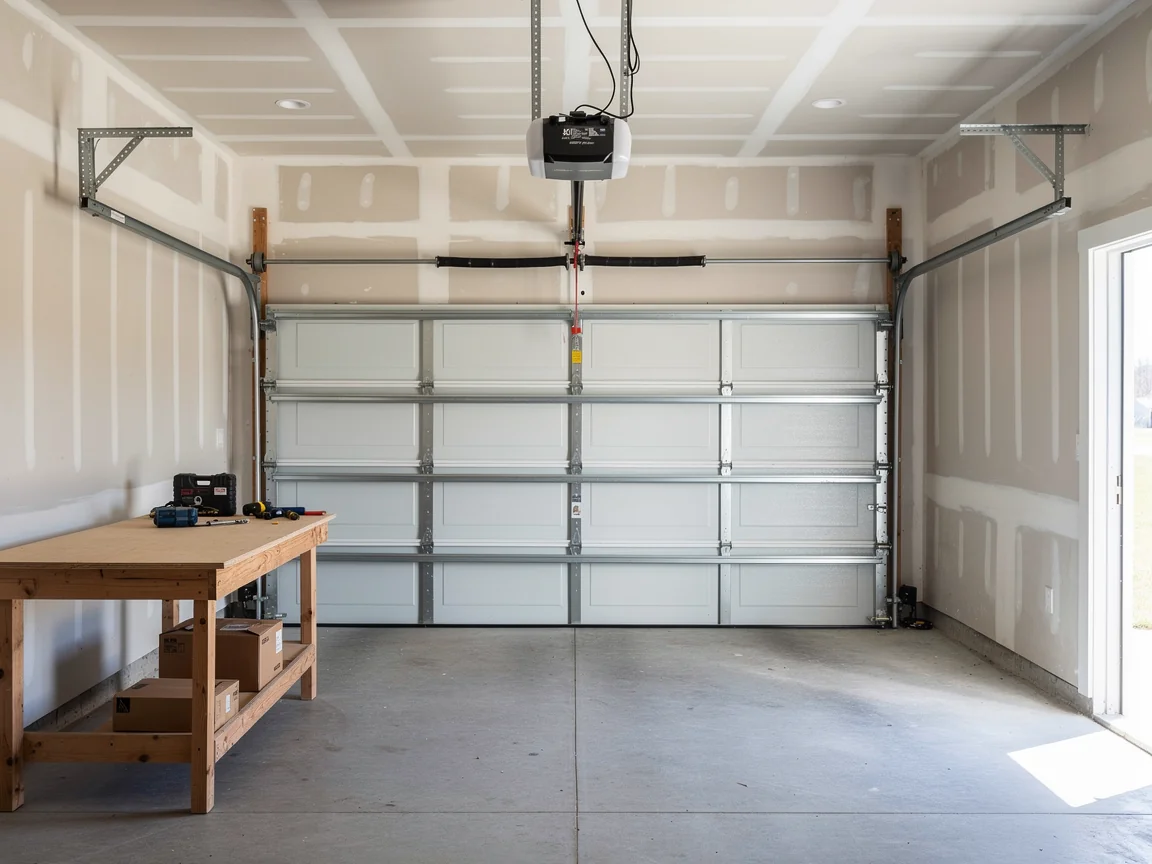
If the door is sitting crooked, hanging lower on one side, or stopped halfway with a gap between the roller and the track, it's off track.
Sudden or gradual
Sometimes it's obvious - a loud bang, then the door won't move. Other times it's gradual: the door starts rubbing or grinding against the track edge for a week or two before it finally pops loose.
One-side off-track clues
A door that's off track on one side only is often a snapped cable or a bent track section near the bottom, where the door takes the most abuse opening and closing. A door off on both sides, especially an older one-piece or sectional door, usually points to worn rollers that have been riding loose in the channel for a long time.
Stop running the opener
Either way, don't keep running the opener once you've noticed the door isn't tracking straight - forcing it with the motor bends the track further and can pull the section apart at the hinge.
Why It Happens Here
Housing across the Texarkana service area mostly went up between 1971 and 1992, with the median build year around 1984, and that stock runs through six named areas built in that same '80s and '90s wave. That matters for this specific fault: tracks, rollers, and hinges installed in that window are now thirty to fifty years old, well past the point where steel rollers and galvanized track hold tight tolerances. Slabs settle unevenly over that much time, jambs shift a fraction of an inch, and track bolted in 1984 doesn't sit as square as it did the day it went in - small misalignments that eventually let a roller walk out of the channel. The climate here falls in a moderate heat band, so this isn't a cold-snap or extreme-heat problem the way it is in some parts of the country; it's a slow age-and-settling problem, which is why off-track calls here tend to come from houses, not from the weather.
The DIY Question
You can push a loose roller back into the track yourself if the door is down, the opener is unplugged, and the spring tension hasn't shifted - that's a low-risk fix.
Never force it back
What you should not do is try to force a door back on track while it's partway open or under spring tension, and you should not try to re-tension or replace a torsion spring yourself; that's where people get hurt.
Tools needed for repairs
If the track is bent, if a cable has snapped, or if the door came off because a hinge cracked, that's a job for tools and experience, not a crowbar and good intentions.
Owners prefer repairs
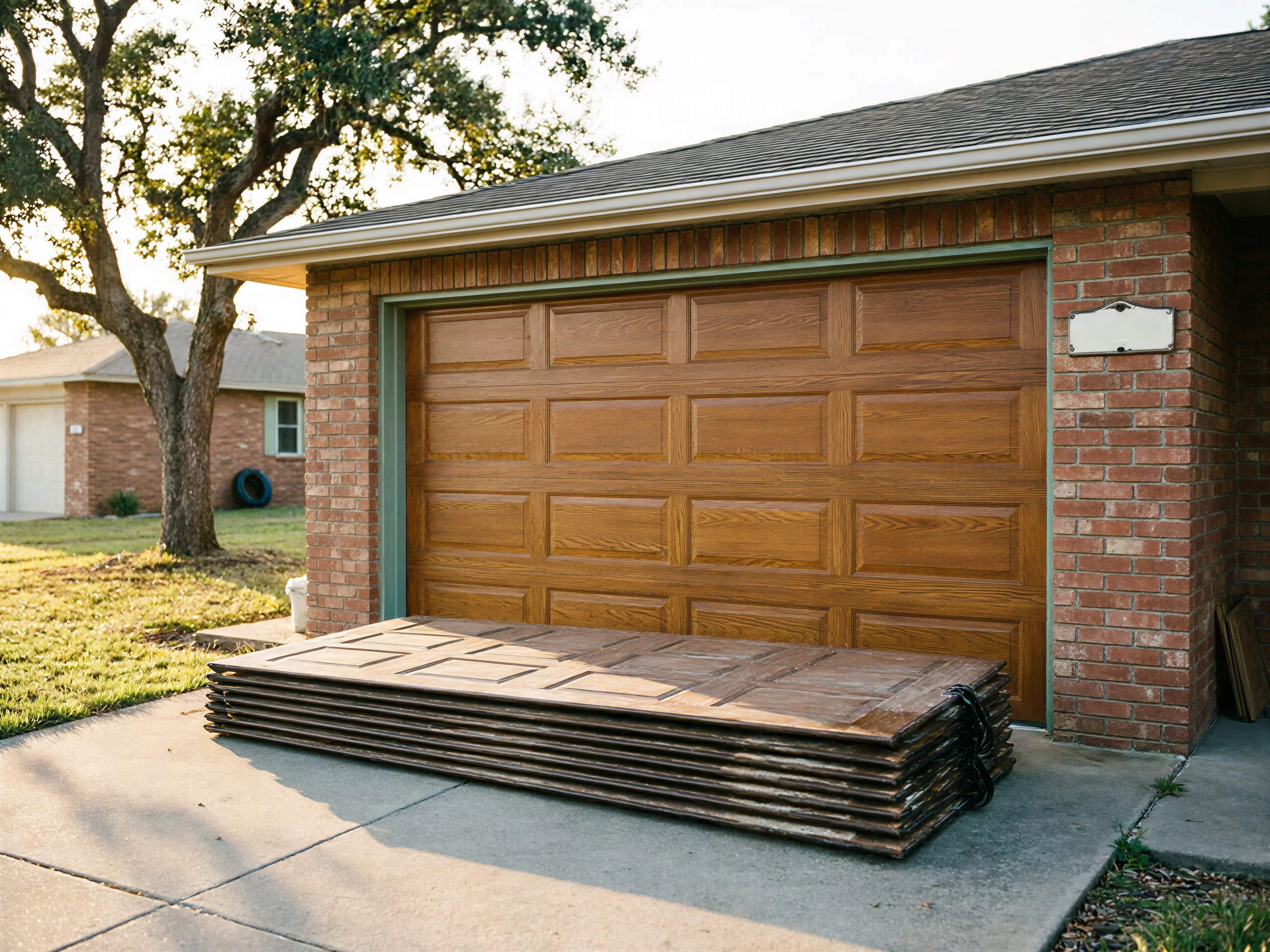
Given a median household income of $51,346 across this area, most owners we talk to want the door repaired, not replaced, when it's a track or hardware issue - and most of the time that's the right call. Replacement only makes sense when the door itself is warped, the panels are rusted through, or the track damage is bad enough that a repair would just fail again in a year.
Talk to a local pro
Garage door service in Texarkana?
Same-day service with honest, upfront quotes.