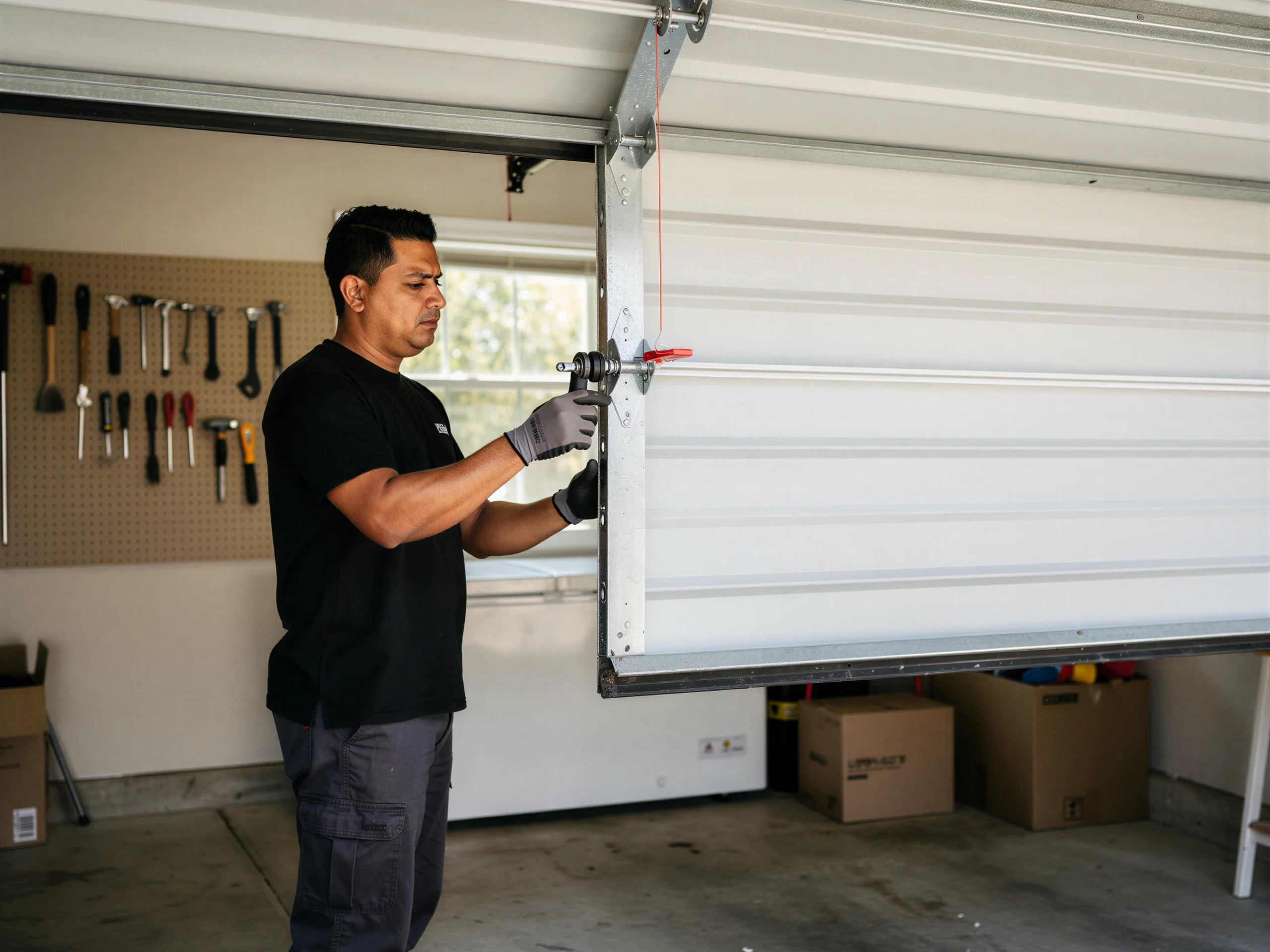
How to Book
We run this job from Texarkana, 19 miles out, so there's no branch office or drop-in counter in New Boston itself. You call or book online, tell us the door is off track (or sounds like it - grinding, a visible gap at one roller, the door hanging crooked), and we build the trip into the day's route. Because this is a dispatched call rather than a walk-in shop, it helps to describe what you're seeing: did the door come off during normal use, after something hit it, or has it been drifting out of alignment for weeks. That detail changes what we load on the truck before we leave Texarkana. We don't keep an on-call crew sitting in New Boston waiting for a page like this one gets a handful of calls a month, not a handful a day, so a clear description up front saves a second trip. See the area page for what else we cover out this way.
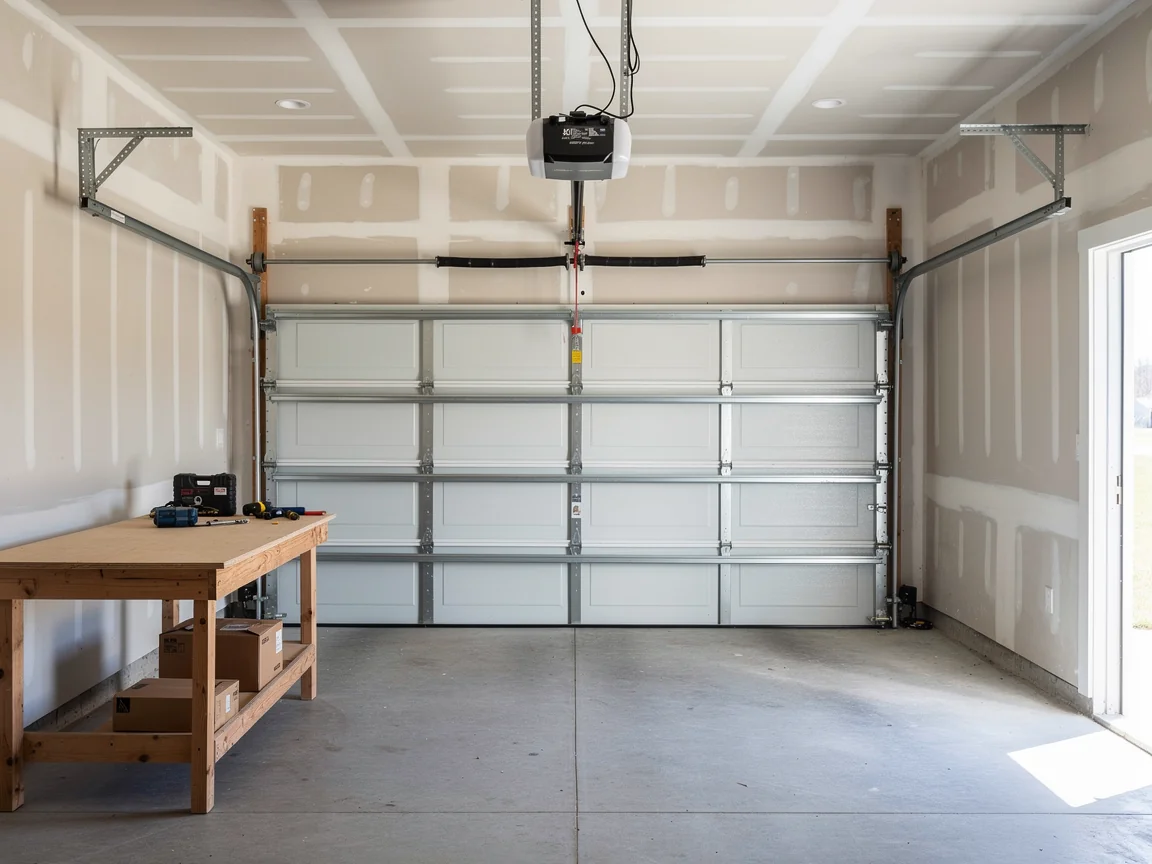
The DIY Question
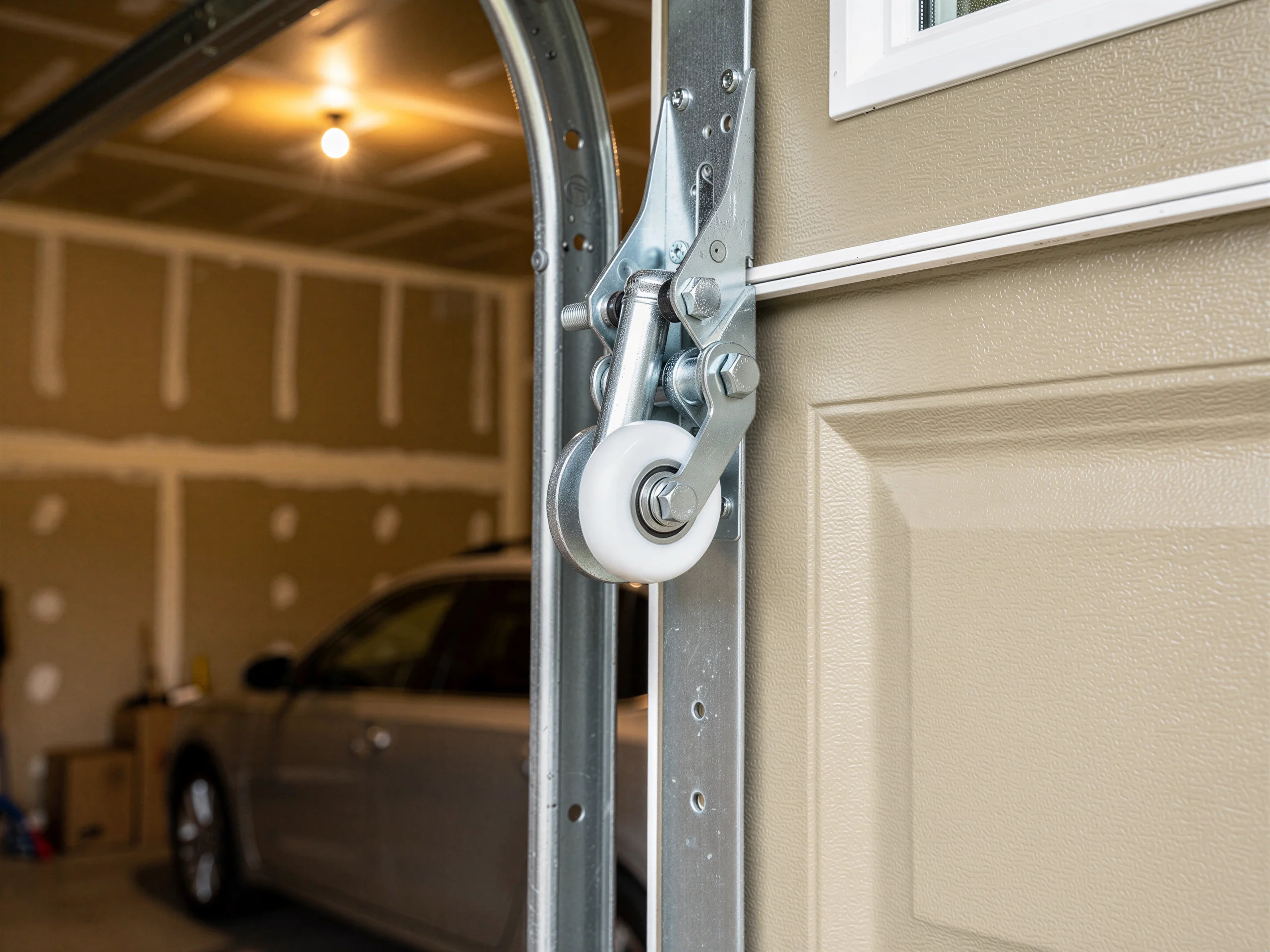
You can usually tell if a door is off track without opening the panel: one side rides higher than the other, a roller sits outside its rail, or the door won't move past a certain point.
Avoid forcing with opener
What you should not do is force it with the opener. Running the motor against a jammed track strips the gear or bends the roller carrier further, turning a one-hour fix into a parts order.
Easing door back by hand
If the door came off on one side only and the cable still looks intact, you can sometimes ease it back by hand with the opener disconnected - but if a cable is visibly frayed or a spring looks stretched past its coil, stop and call.
Waiting beats injury
We'd rather tell you to wait for us than have you lose a finger on a torsion spring that's already under load. That's the honest limit here: we can walk you through what's safe to check, not what's safe to force.
The Complications
New Boston's housing runs older than the service area's broader median. Census data puts the area's housing at a 1984 median build year; New Boston itself centers closer to 1979. Five years doesn't sound like much until you're standing in front of the garage - doors from that stretch often carry steel track bent and re-bent over four decades, galvanized rollers worn thin, and brackets bolted into framing that's shifted with the house. A track that's slightly bowed from age behaves differently off a fresh installation; it doesn't snap back clean after a realignment, it needs reshaping or replacing outright. The region sits in a moderate heat band, and that steady seasonal expansion and contraction works at loose lag bolts over the years, which is part of why a door that's run fine for a decade suddenly starts walking off its rail. None of that is unique to one house - it's a pattern tied to when the neighborhood went up.
Time on the Job
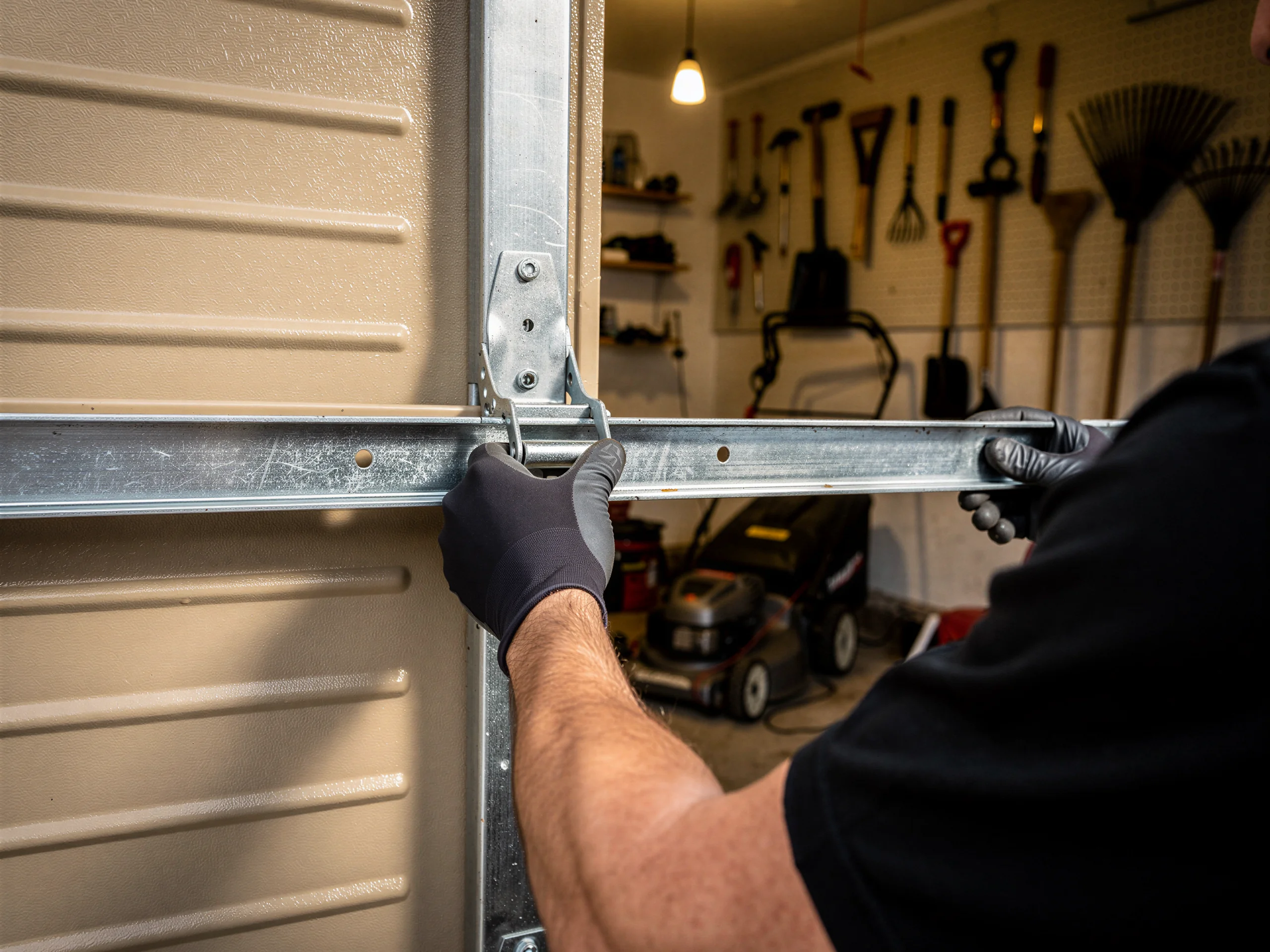
An off-track call is a diagnose-then-fix job, not a swap-and-go. We start by checking whether the track itself is bent, whether the rollers are the problem, or whether a hinge has pulled loose and thrown the whole panel out of square.
Re-seating versus rebuilding track
On a door where the track just needs re-seating and the hardware is sound, that's a straightforward adjustment. On a 1970s-era door where the track is bowed or the roller carriers are worn through, the fix runs longer because we're reshaping or replacing hardware, not just sliding a roller back onto its rail.
No phone-quoted timeframe
We don't quote a flat window for this one over the phone - it depends on which of those two jobs is waiting when we open the panel, and we'd rather tell you that than promise a number we can't back up.
What the Fix Involves
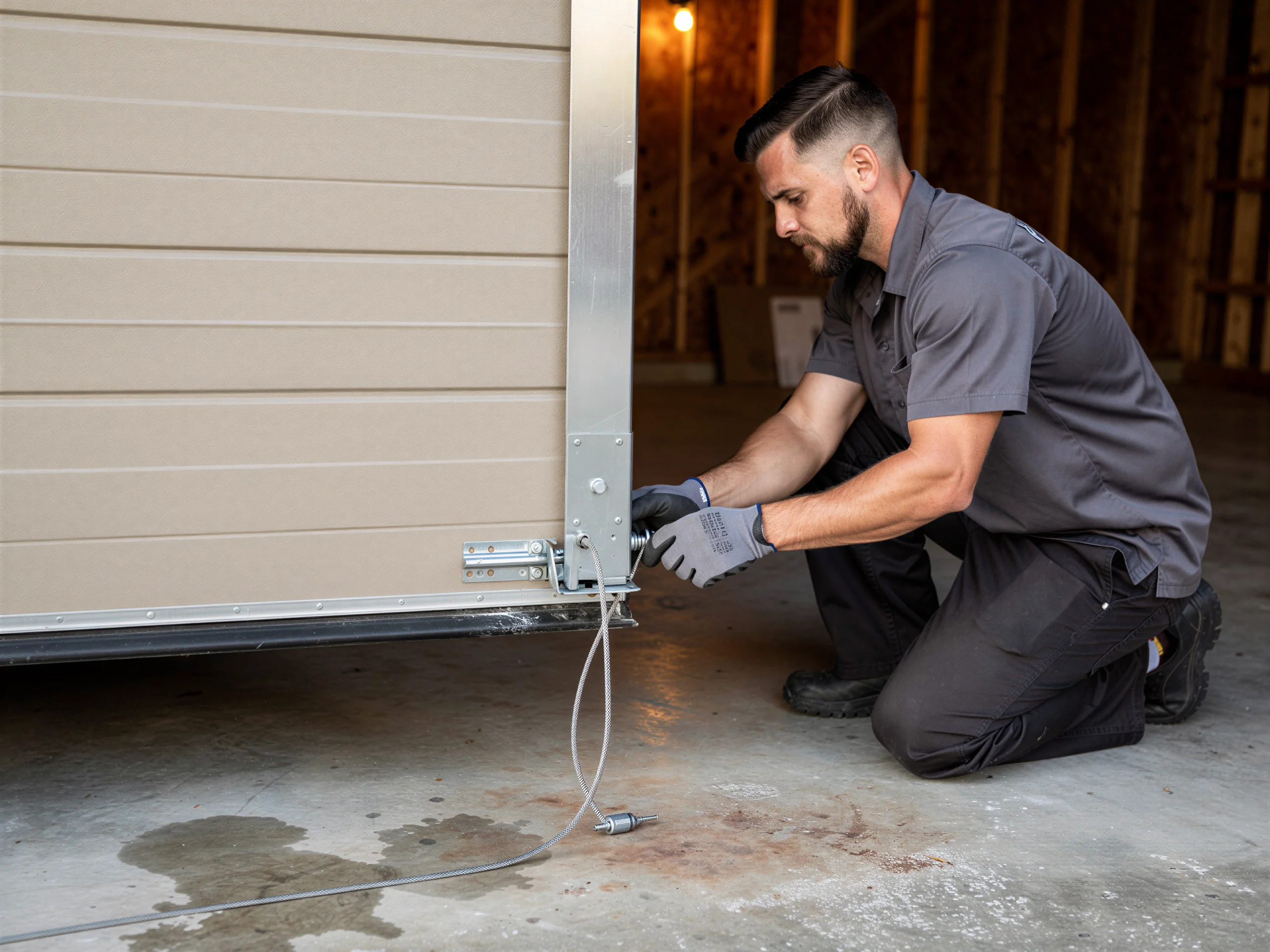
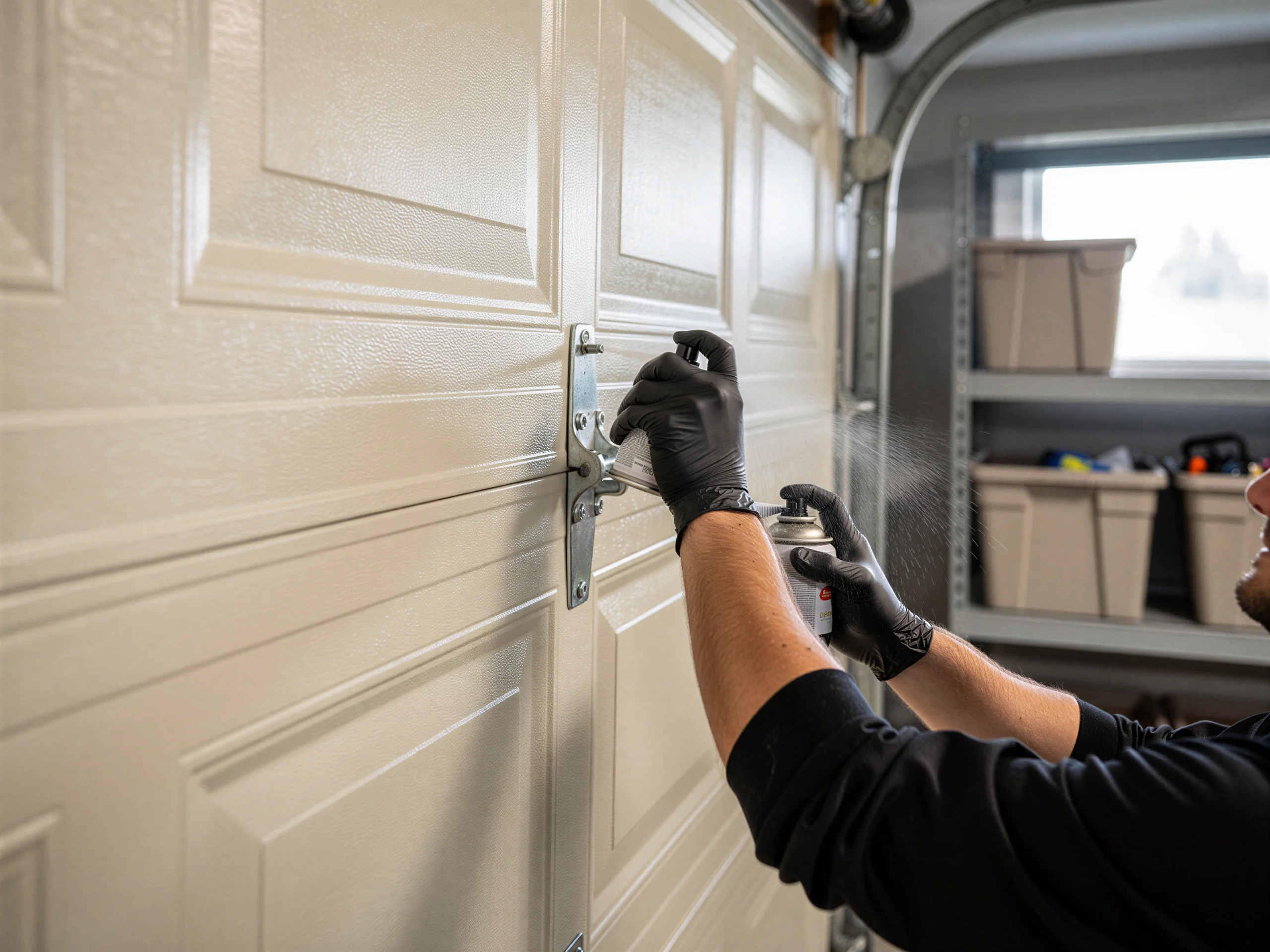
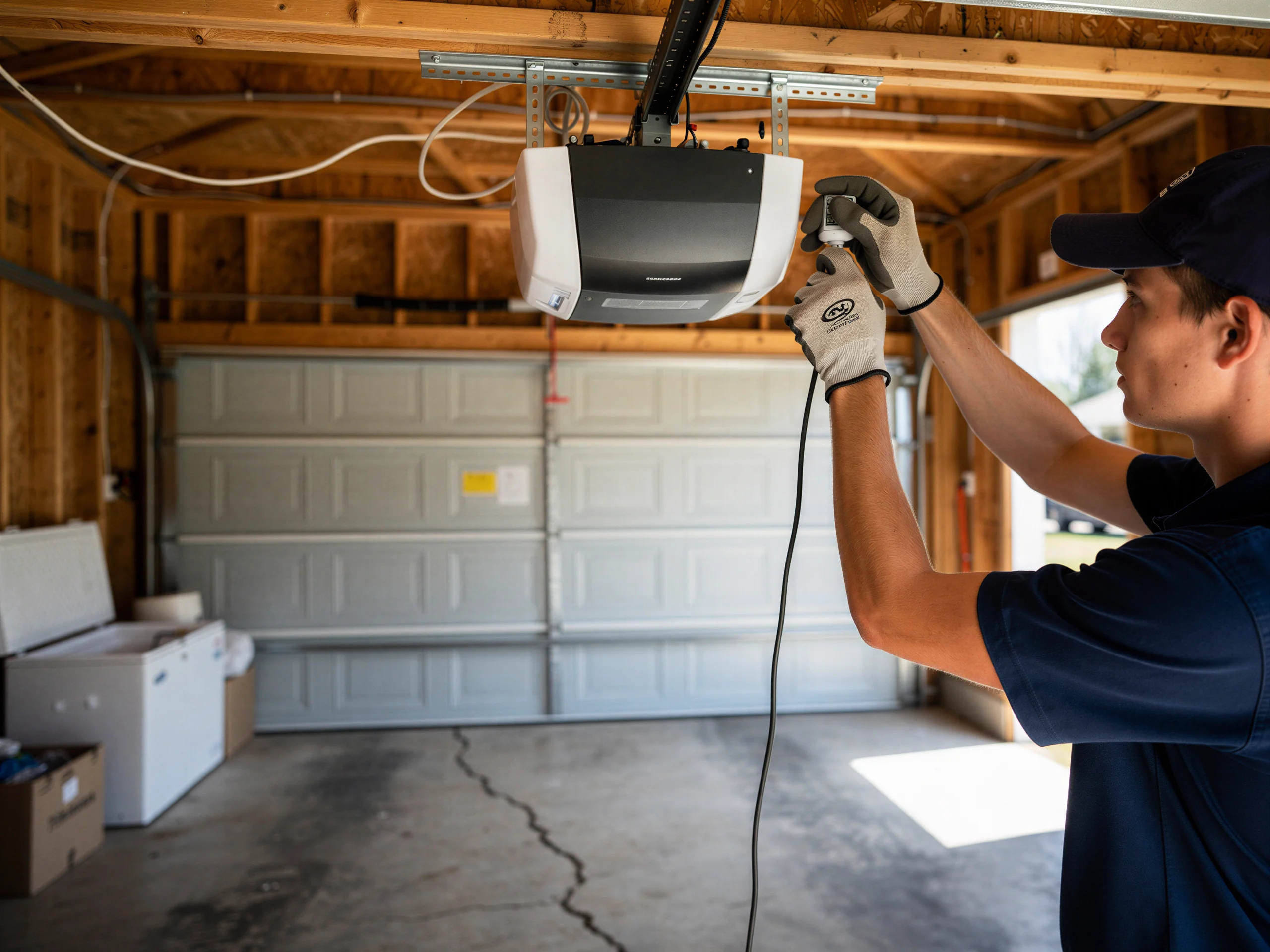
First we disconnect the opener so nothing drives the door while we're working underneath it. Then we check the track for bends or gaps at the brackets - on older installations the brackets themselves have often worked loose from the jamb, which throws the whole rail out of plumb even if the track metal is fine. If the rollers are worn or cracked, we replace them before putting the door back on the rail; reseating a door on bad rollers just sends it off track again. We re-square the track against the jamb, torque the brackets down, and run the door by hand several times before reconnecting the opener, checking for binding at the curve where vertical track meets horizontal. If the spring looks compromised in the process, that's a separate conversation - we won't touch spring tension as a side note to a track repair.
Talk to a local pro
Garage door service in Texarkana?
Same-day service with honest, upfront quotes.