How to Book
We run this job out of Texarkana, about 19 miles from New Boston, so we're not sitting on a truck around the corner - when you call, we're scheduling a trip out, not a walk-over.
Pre-visit questions
That means we ask a few more questions up front: door size, whether it's making noise or just stuck, whether the opener still has power. The more you can tell us before we load the truck, the fewer surprises on site.
No local branch
We don't keep a New Boston address or a second location here - one crew, one shop, covering New Boston from Texarkana. If you need same-day or emergency-only service, ask when you call; we'll tell you straight whether that's realistic for your spot in town rather than promise something we can't back up from 19 miles away.
Bigger jobs upgrade path
You can see the areas we cover from here at our New Boston service page, and if what you're dealing with turns out to be bigger than a single repair - a full door swap, an opener upgrade - that's covered on our main Texarkana page, not here.
The DIY Question
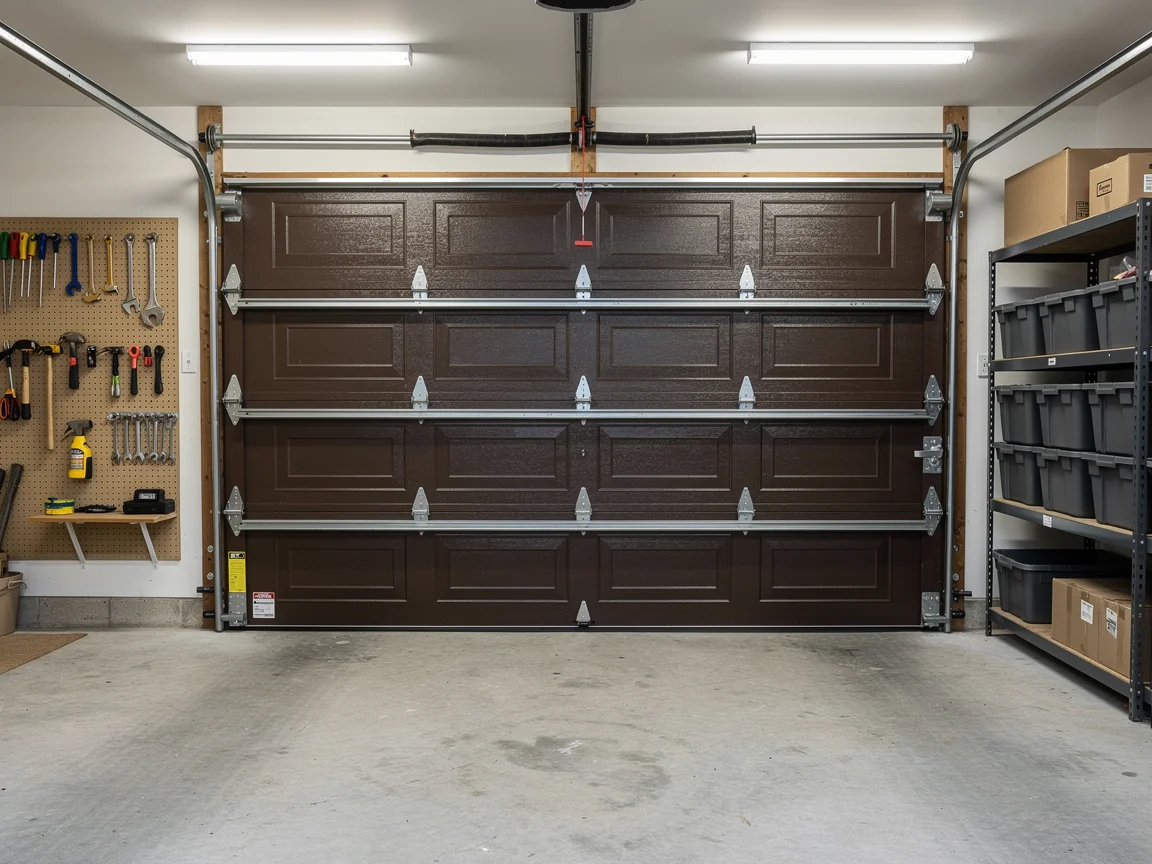
A door built around 1979 is simple compared to what's sold today, and that cuts both ways. There's less electronics to fight with, but the galvanizing on 45-year-old steel panels is long past its best, and extension-spring setups from that period don't forgive a bad DIY adjustment the way a modern torsion system with a drop-in winding cone sometimes does.
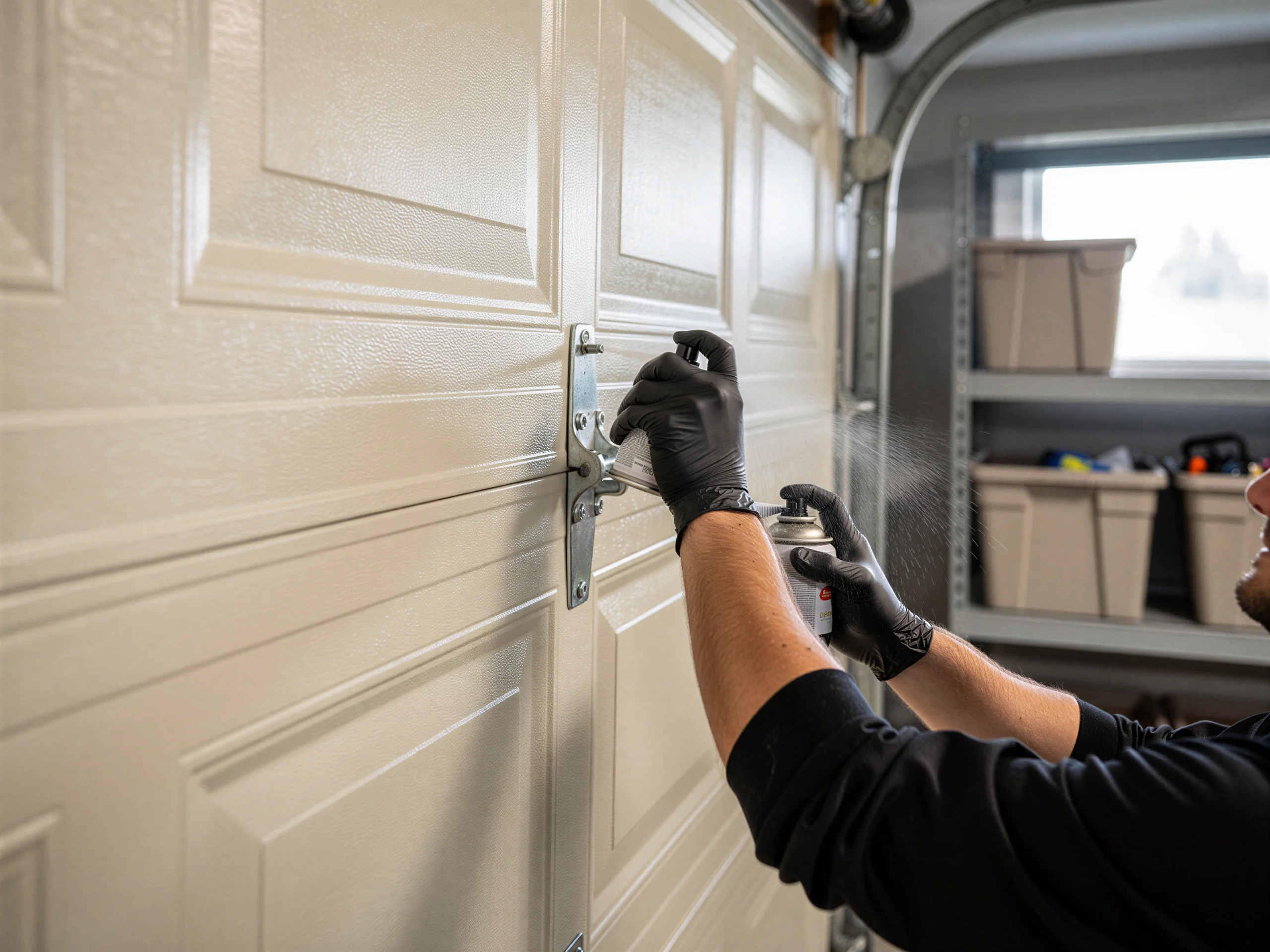
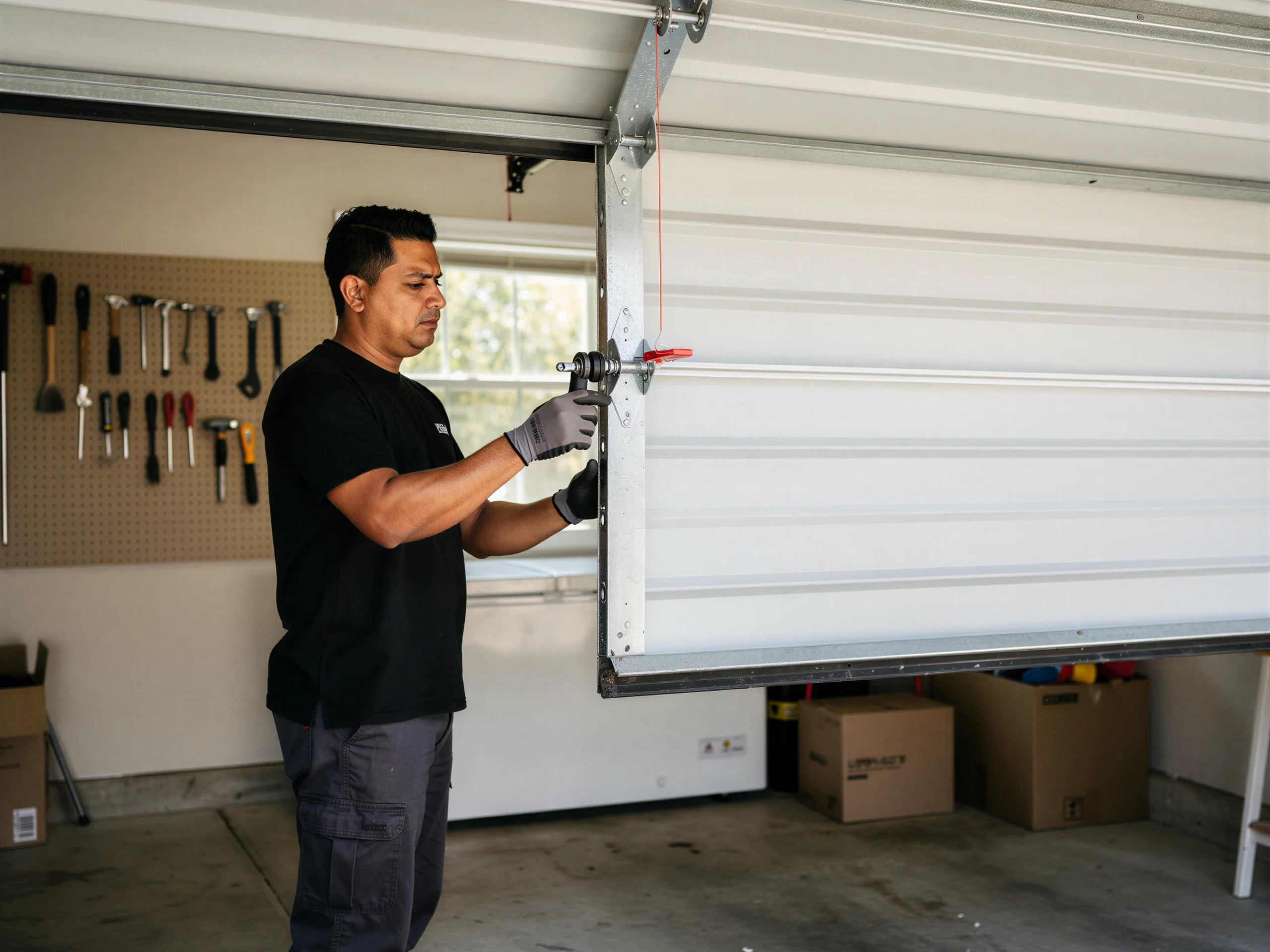
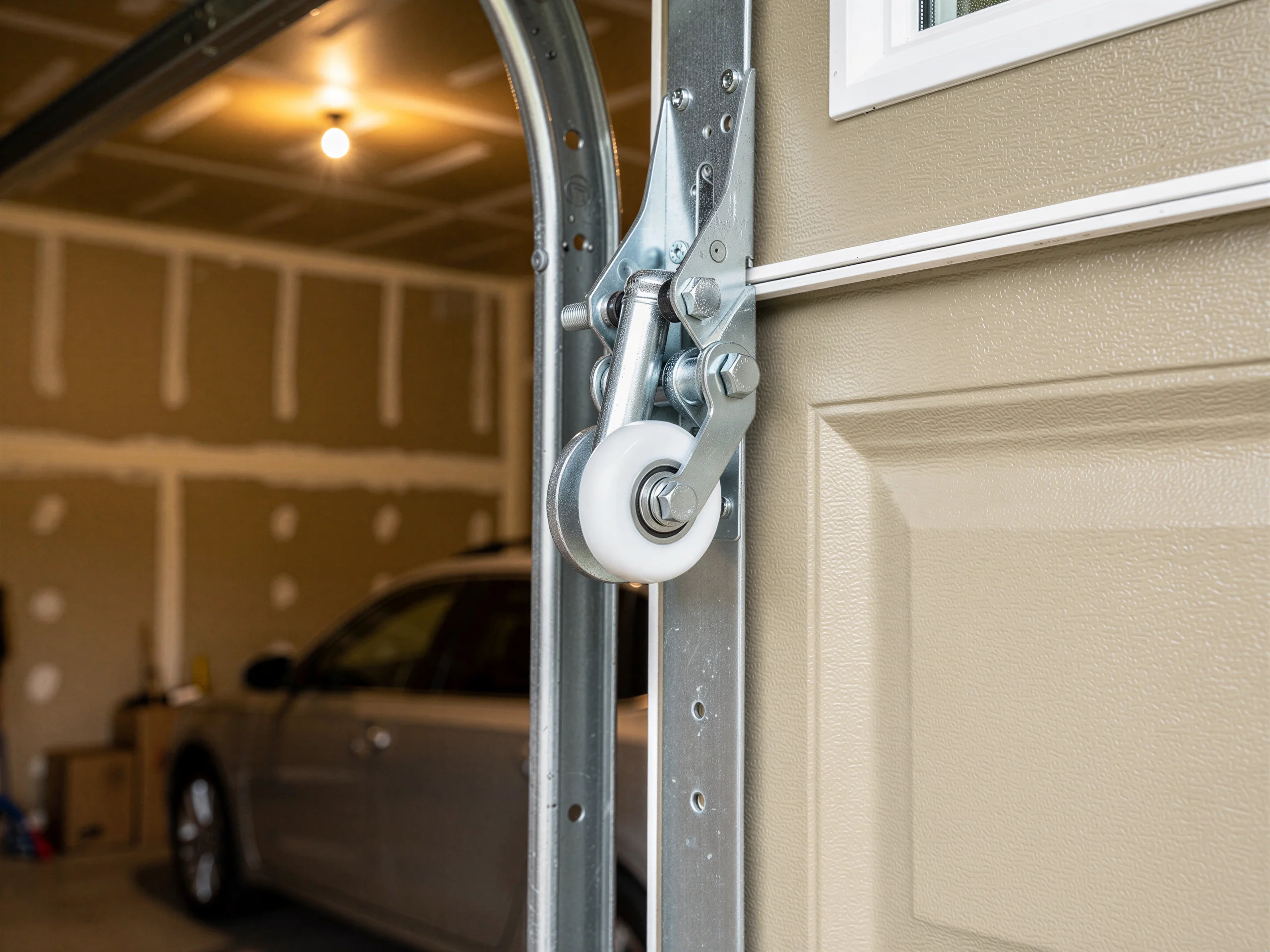
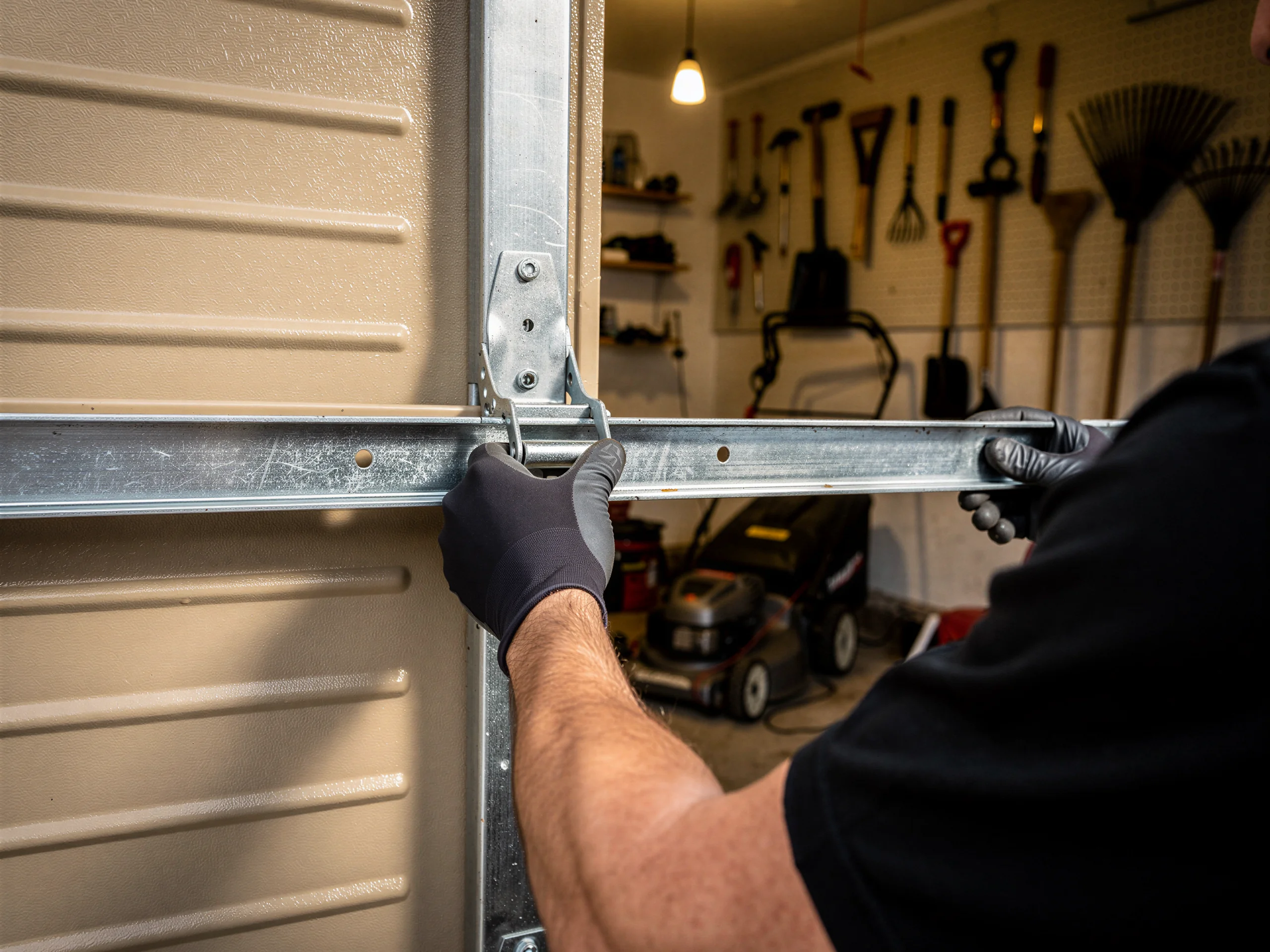
Tightening a loose roller bracket or lubricating hinges is fair game for most owners, including in New Boston's older stock. Springs are not. An extension spring under tension lets go fast, and on a door this age the mounting hardware holding the pulley or safety cable may itself be original and more brittle than it looks. If the door is off its track, or a cable has jumped the drum, that's a call-us job, not a weekend one.
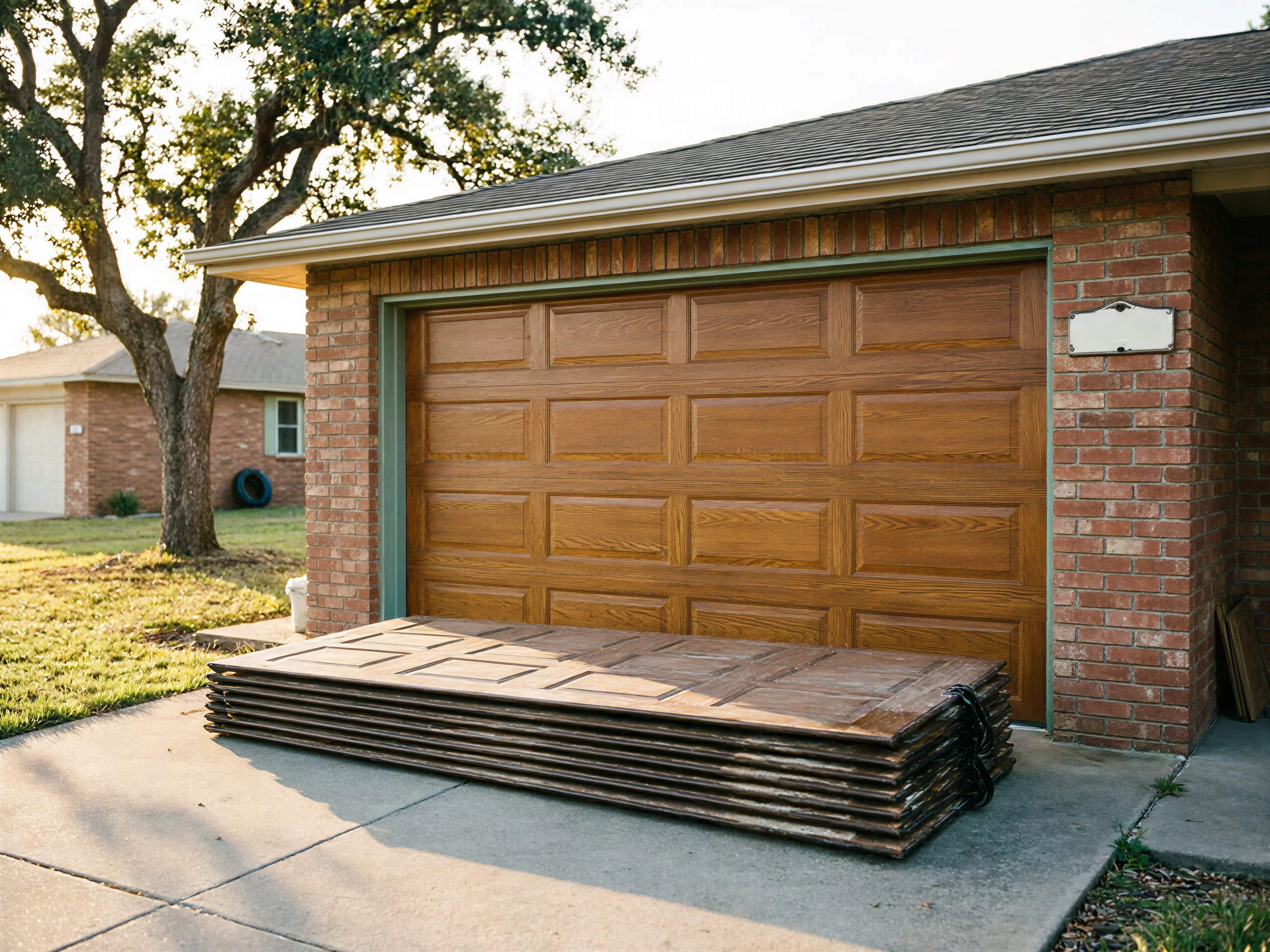
We'll be honest about the other side of this too: sometimes the cost of chasing a 45-year-old door's quirks - mismatched replacement panels, a track bent from decades of settling - gets close enough to a new door that repair stops making sense. We'll tell you when we see it, not after we've billed for the attempt.
The Complications
New Boston's housing sits around a median build year of 1979, noticeably older than the service area's overall median near 1984.
Pre-standard hardware availability
That gap matters on this job: a door and track installed in the late 1970s predates most of the opener and safety-sensor standards that came later, and parts for the original hardware - specific drum sizes, older-style extension spring end brackets - aren't something a supply house stocks off the shelf anymore.
Milder thermal stress benefit
The area runs a moderate heat climate, which is kinder to garage doors than extreme swings would be - less expansion-and-contraction stress on panels and seals than you'd see in a harsher band. That's one thing working in these doors' favor after four decades.
Owners favor full replacement
With 1,879 households in New Boston and a median income of $57,344 - higher than the wider service area's $51,346 - we see more owners here willing to go ahead with a full opener replacement rather than patch a dying one, once we lay out the real cost difference. That's a judgment call we make with you, not for you.
Time on the Job
Most single-door repairs - a broken roller, a misaligned track, a dead opener - run under two hours once the truck is on site. Spring replacement on an extension-spring system typical of 1979-era construction usually adds time versus a modern torsion setup, because the pulley and cable routing on older doors takes more careful handling to get safe again.
The trip itself is the bigger variable here. At 19 miles out from Texarkana, travel time is part of the job in a way it wouldn't be for a call six blocks from the shop. We build that into scheduling rather than pretend it isn't there.
If we get on site and find the original hardware is more deteriorated than expected - a bent drum, a frozen pulley seized from decades of rust - that can turn a two-hour job into a longer one, or into a conversation about replacing rather than repairing. We'd rather tell you that mid-job than rush a fix that won't hold.
What the Fix Involves
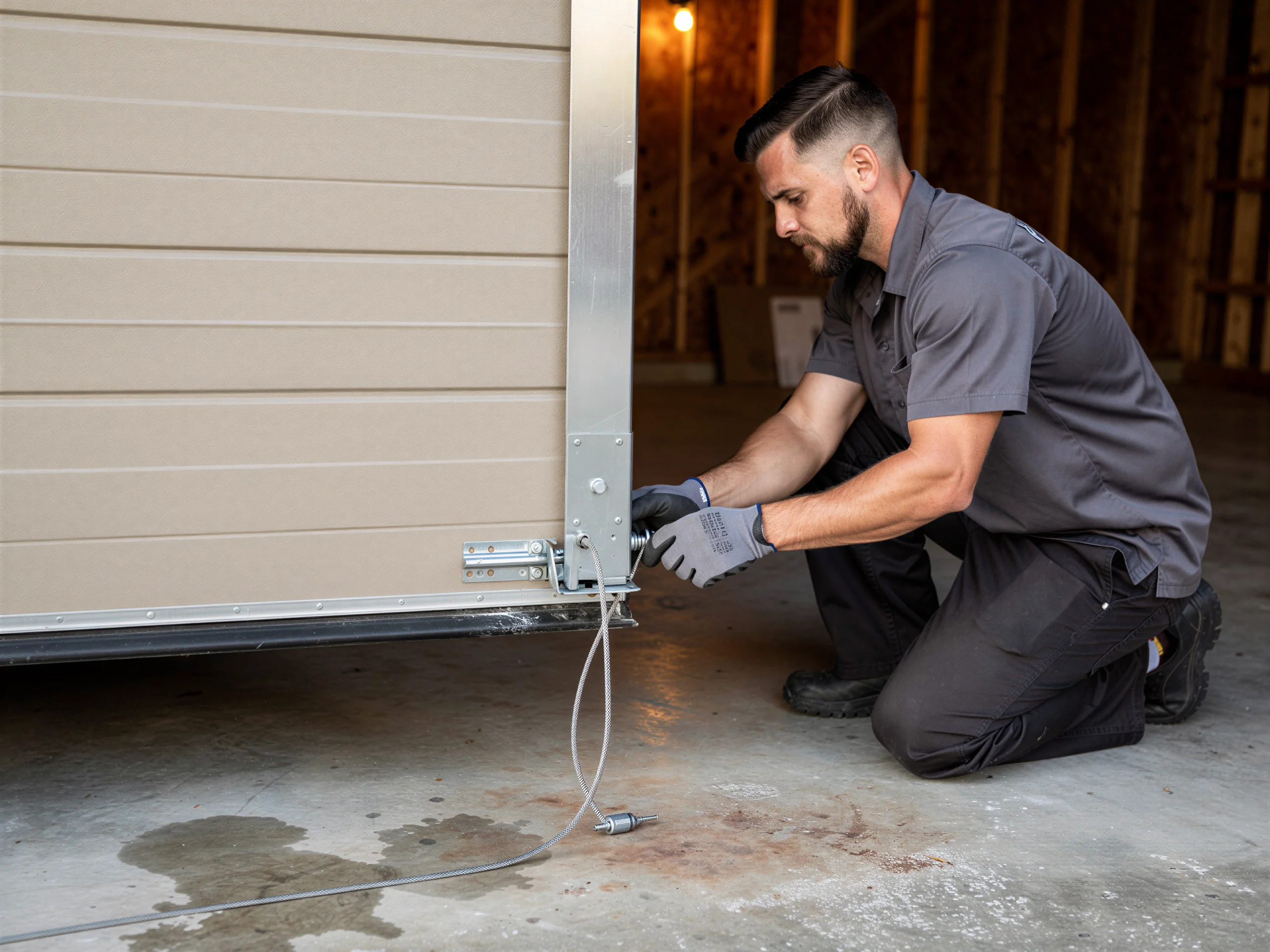
On a door from this era, the fix usually starts with the spring system, since extension springs were the standard before torsion setups took over in most new construction.
Paired spring checks
We check both springs together - if one's gone, the other is usually not far behind, even if it hasn't failed yet. Next is the track and roller assembly. Forty-five years of use means worn roller stems and track rust are common, and on a steel door this size, a bent section of track throws the whole panel out of alignment even after the spring is fixed.
Safety reverse sensors
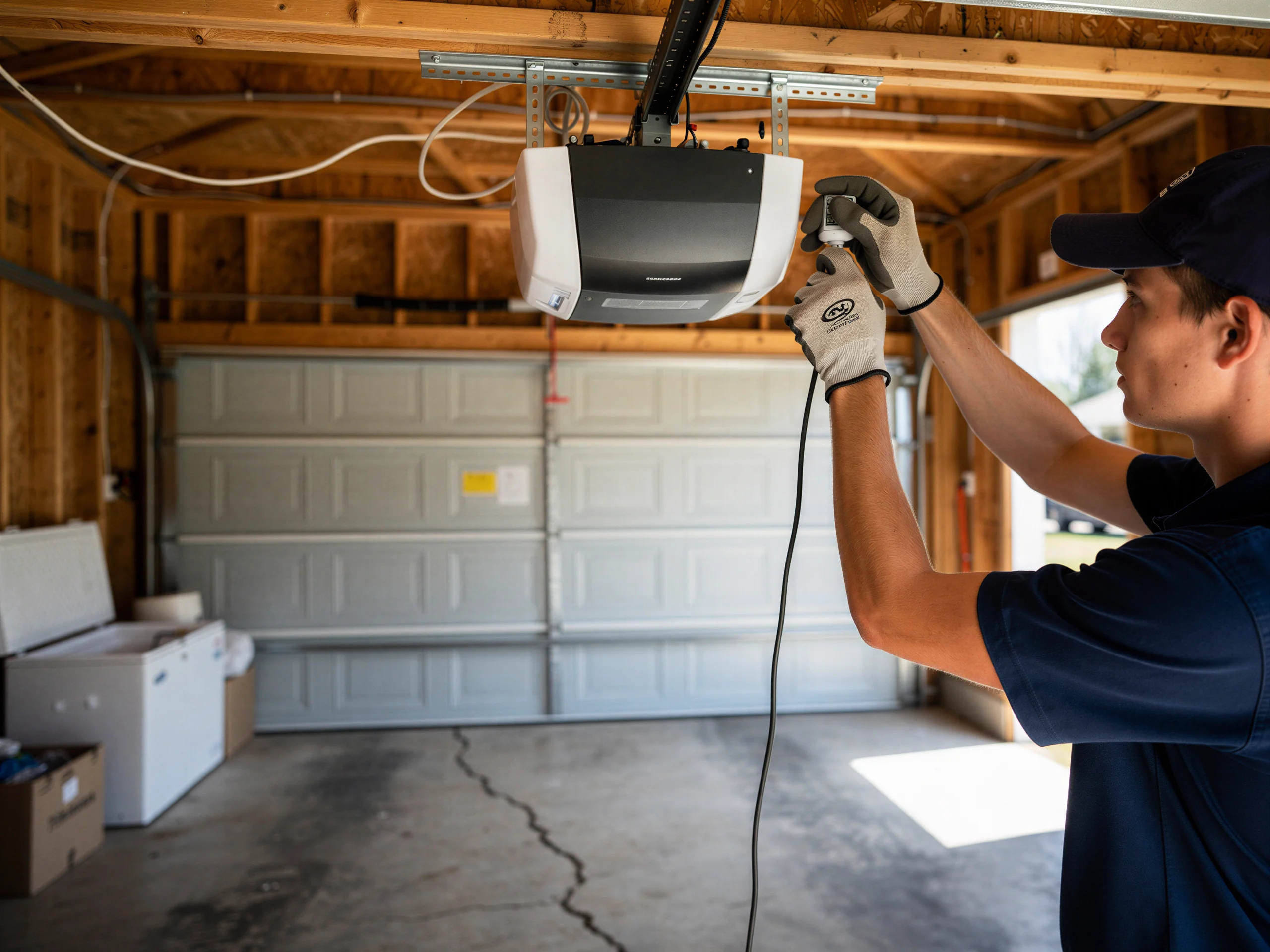
We true the track before we touch the opener. If the opener itself is original or an early replacement, we look at whether it has working safety-reverse sensors - a lot of units from that period predate the sensor requirement entirely.
Upgrading to current standard
Where it doesn't, we talk through bringing it up to current standard rather than leave a door that won't reverse on an obstruction. That's not a repair we skip to save time.
Talk to a local pro
Garage door service in Texarkana?
Same-day service with honest, upfront quotes.