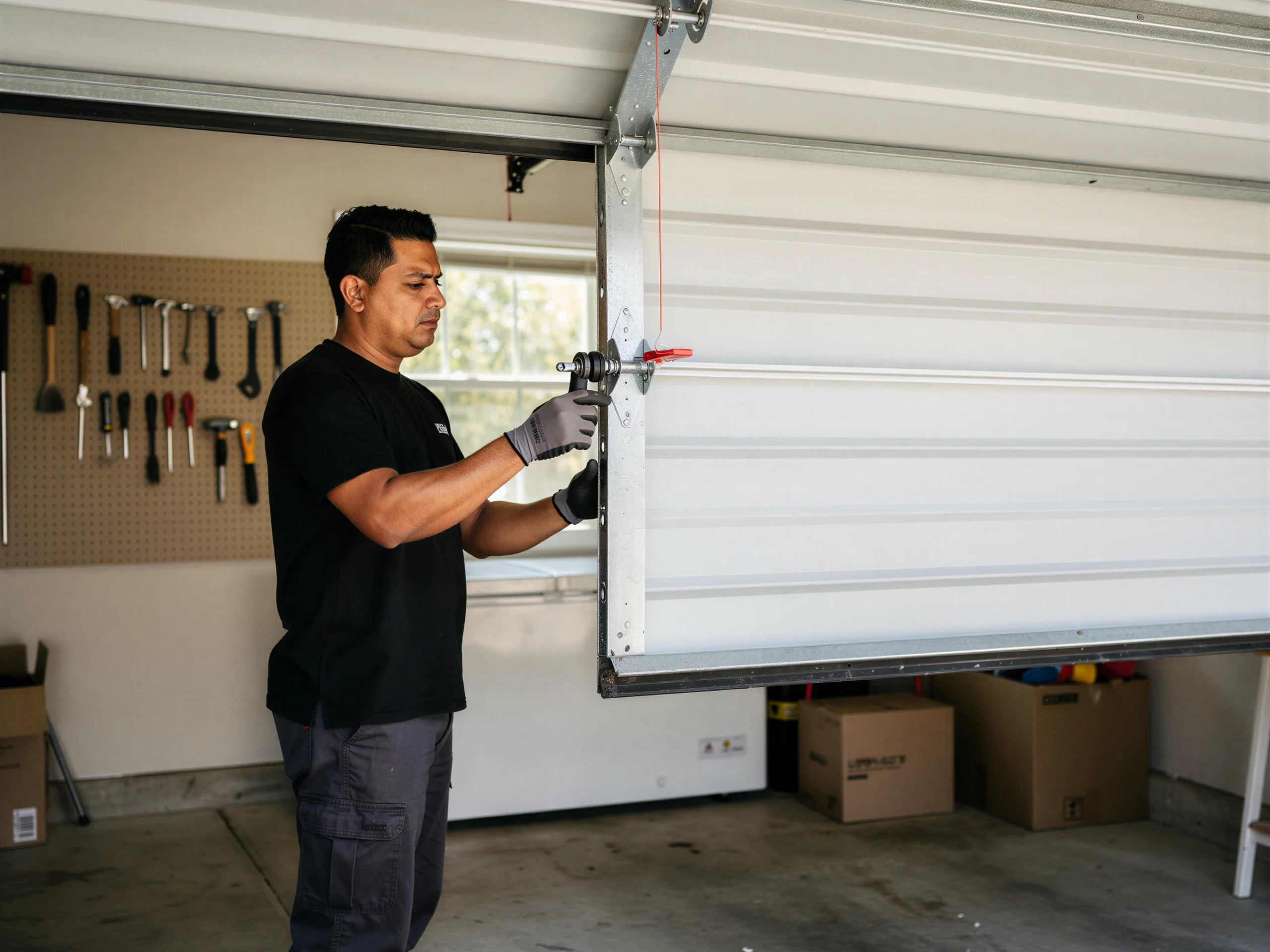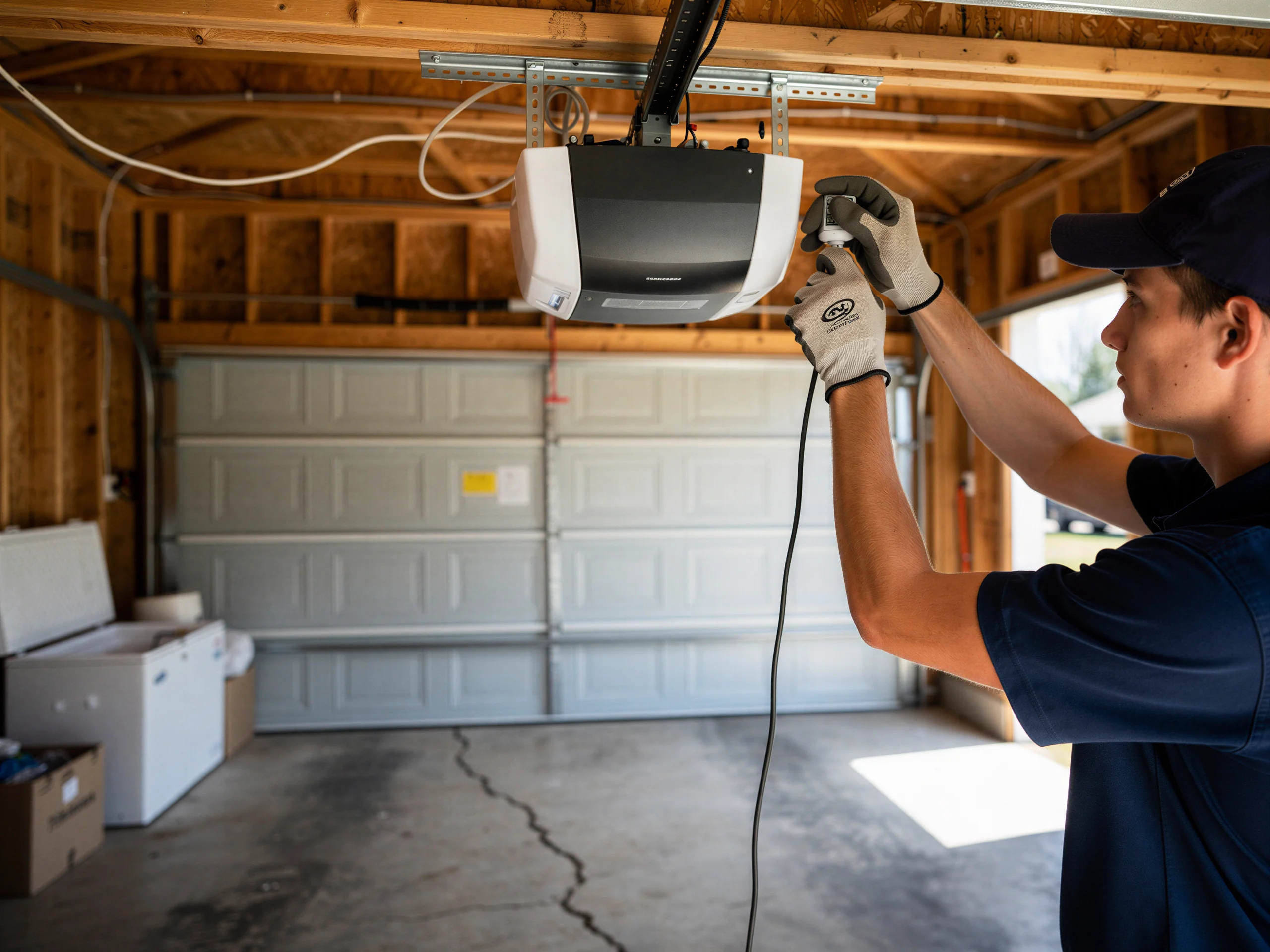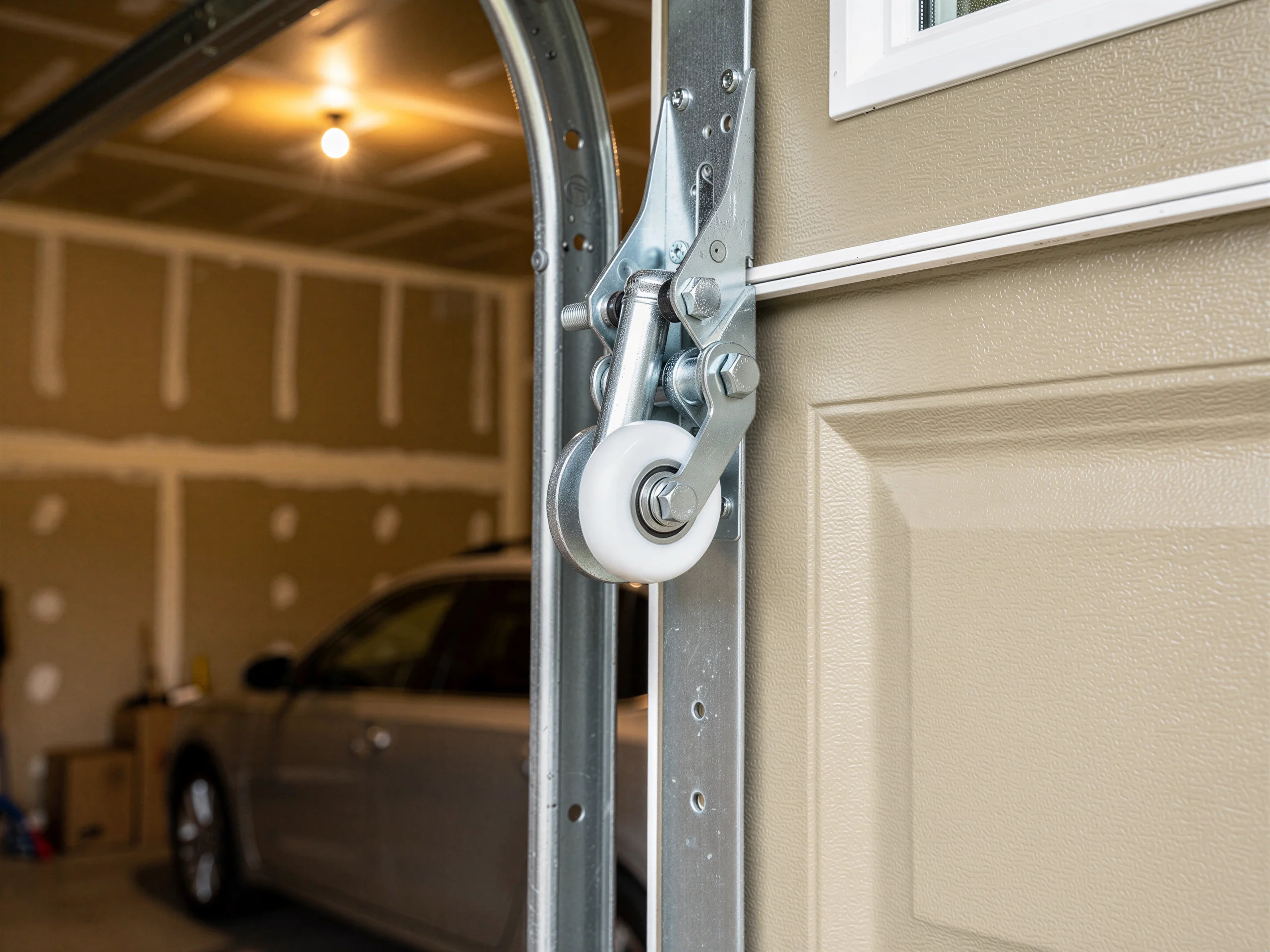
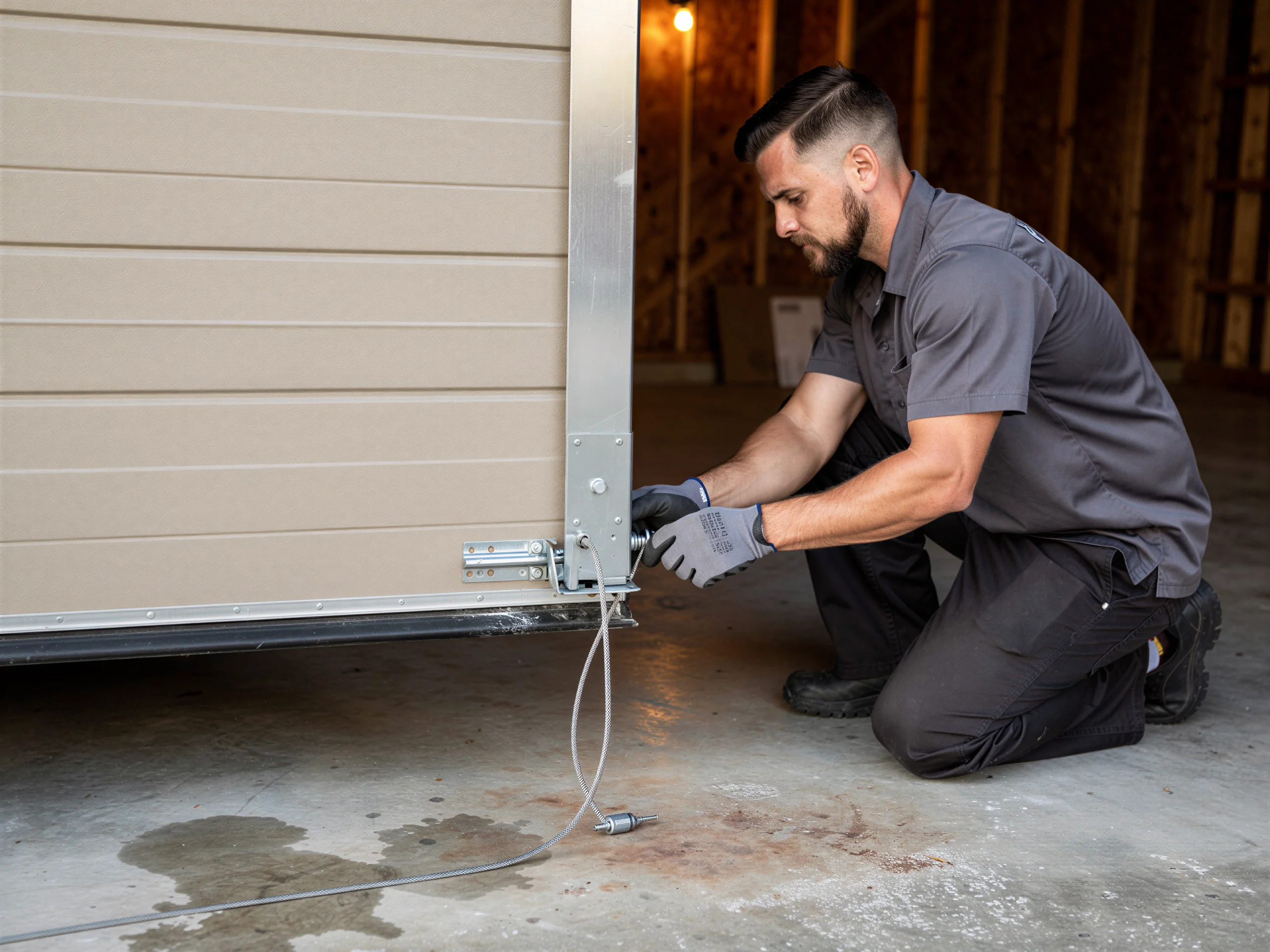
What You Are Seeing
Houses in Hooks mostly went up in 1971, the earliest year in the area's 1971-to-1992 building run, and that's the year extension-spring cable rigs with no secondary safety cable were standard equipment.
Galvanized cable types
If your door is original to the house, you're likely looking at galvanized aircraft cable wound around a drum at each end of the torsion shaft, or on some of these doors, a pair of extension springs running along the horizontal tracks with the cable looping through a pulley at the back.
Strands fraying near drum
Fifty-plus years of expansion and contraction, lawn sprinklers, and plain age work on that steel. What you'll usually see first is a handful of broken strands fraying off the cable near the drum, or the cable itself jumping the groove and bunching up when the door tries to close.
Lopsided drop from one cable
Sometimes the door hangs crooked - one side drops faster than the other because one cable let go while its partner held. Less often, the whole cable snaps clean, and the door comes down hard and jams at the bottom of the track. None of this is a door problem. It's a cable problem, and on a door this age, it's almost always wear catching up with the house.
The Complications
On a 1971-built house in Hooks, the drum and pulley hardware has had over fifty years to rust, and parts that old aren't something we keep stocked on the truck.
Related parts also fail
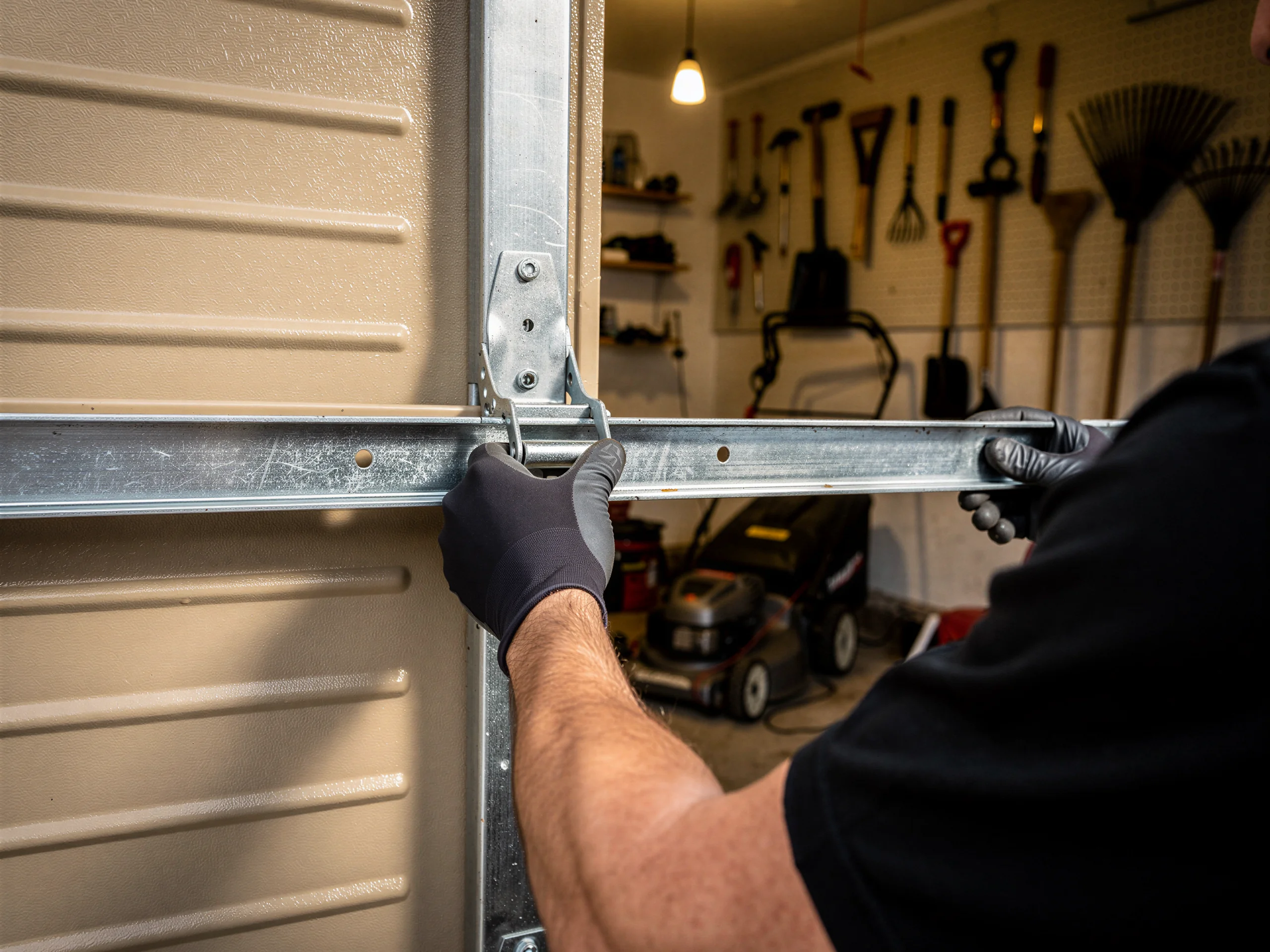
A broken cable rarely shows up alone. The drum it was wound on may be grooved or cracked, the pulley bracket at the bottom of the track is often bent from decades of the cable riding slightly off-center, and the opposite side spring - even if its cable is intact - has usually stretched or lost tension right along with the one that failed.
Both cables swapped
Replacing just the broken cable on a door this old is sometimes a short job and sometimes turns into swapping both cables, both pulleys, and rebalancing the springs so the door doesn't rack sideways the next time it closes.
Income shapes repair choices
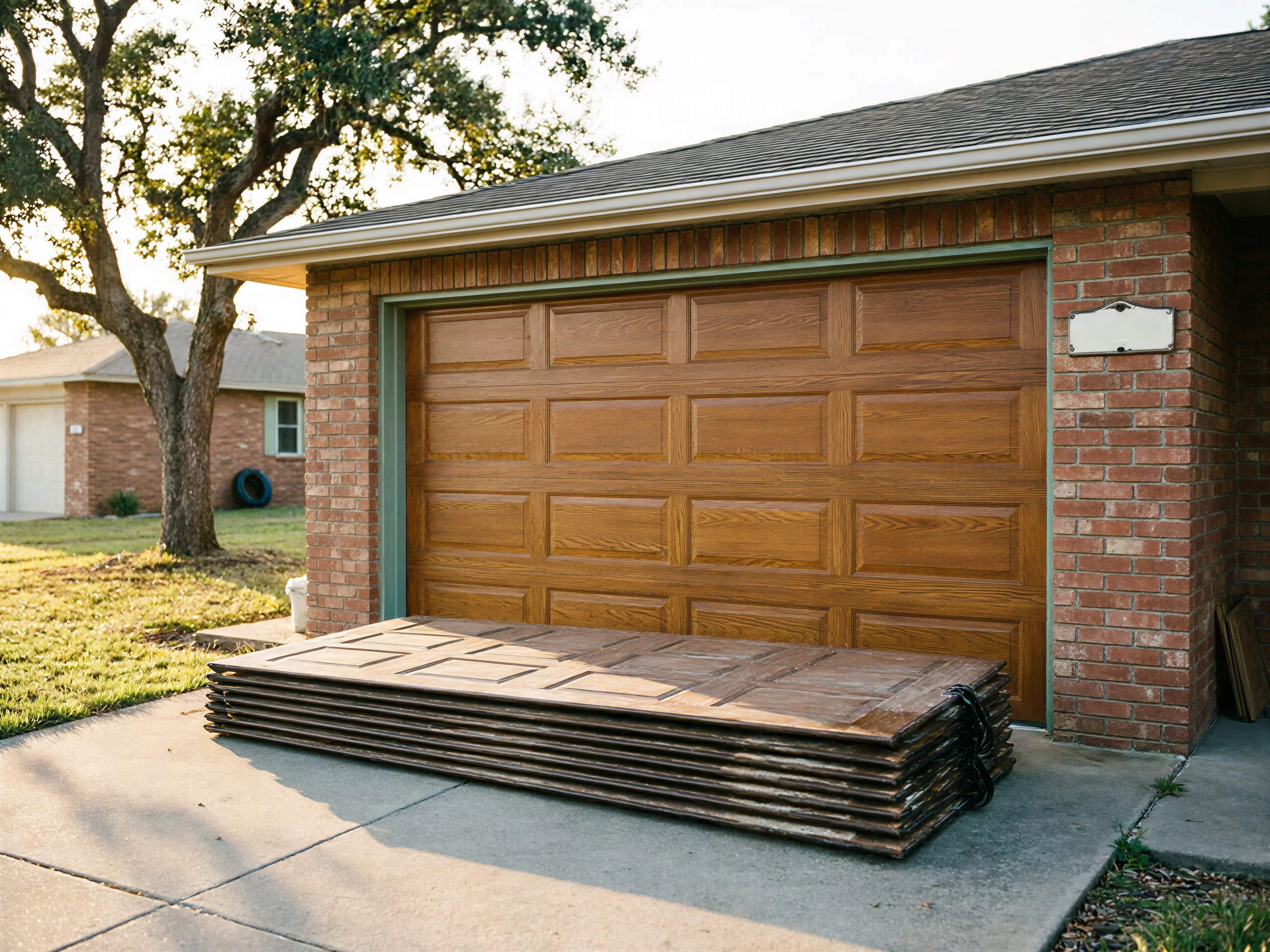
With a median household income of $43,929 in Hooks, well below the service area's $51,346 median, that difference matters when you're deciding how far to go on a repair versus starting to think about a full door. We'll tell you straight which side of that line your door is on before we start pulling hardware off it, not after.
The DIY Question
An extension spring under tension and a cable wound through a pulley is not a safe combination to work on without the spring locked down first - a slipped bar or a cable that lets go while you're holding the drum can put a person in the hospital. That's the honest limit here: we won't walk you through doing this one yourself over the phone, and we'd rather you not try. The other limit worth knowing - if your Hooks door still has its 1971 hardware, the exact drum or pulley bracket that's original to it may not be something anyone stocks anymore, including us. In that case the fix is a compatible modern part sized to match, not an identical replacement, and that's a conversation worth having before we're on site rather than after.
Time on the Job
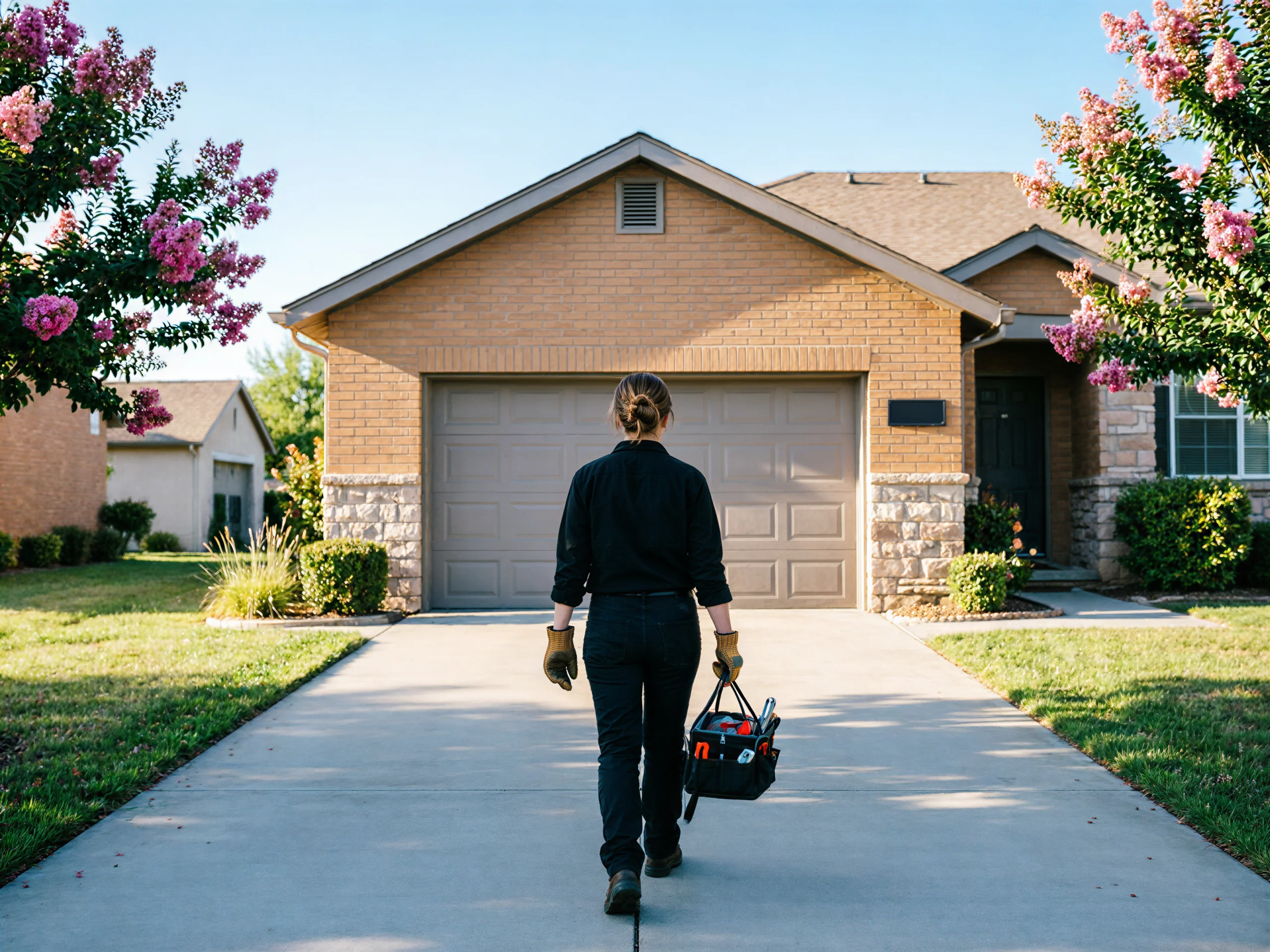
We drive the 11 miles out from Texarkana for every Hooks call, since there's no branch out here. That distance doesn't change what the repair itself takes - swapping a cable and rebalancing a door is the same job whether it's done ten minutes from the shop or further out - but it does mean we schedule Hooks calls in with the rest of the day's route rather than treating it as a drop-everything stop. Hooks counts roughly 962 households, a small slice of the 7,235 households across the wider service area, so it's not a town we're in every single day. If a part needs ordering - which happens more often on hardware this old - that adds time on top of the drive. We'll give you a straight estimate of both before we commit to a date.
Talk to a local pro
Garage door service in Texarkana?
Same-day service with honest, upfront quotes.